This bibimbap recipe is my spin on the famous Korean dish. I top this delicious rice bowl with gochujang sauce, seasoned veggies, and a fried egg.
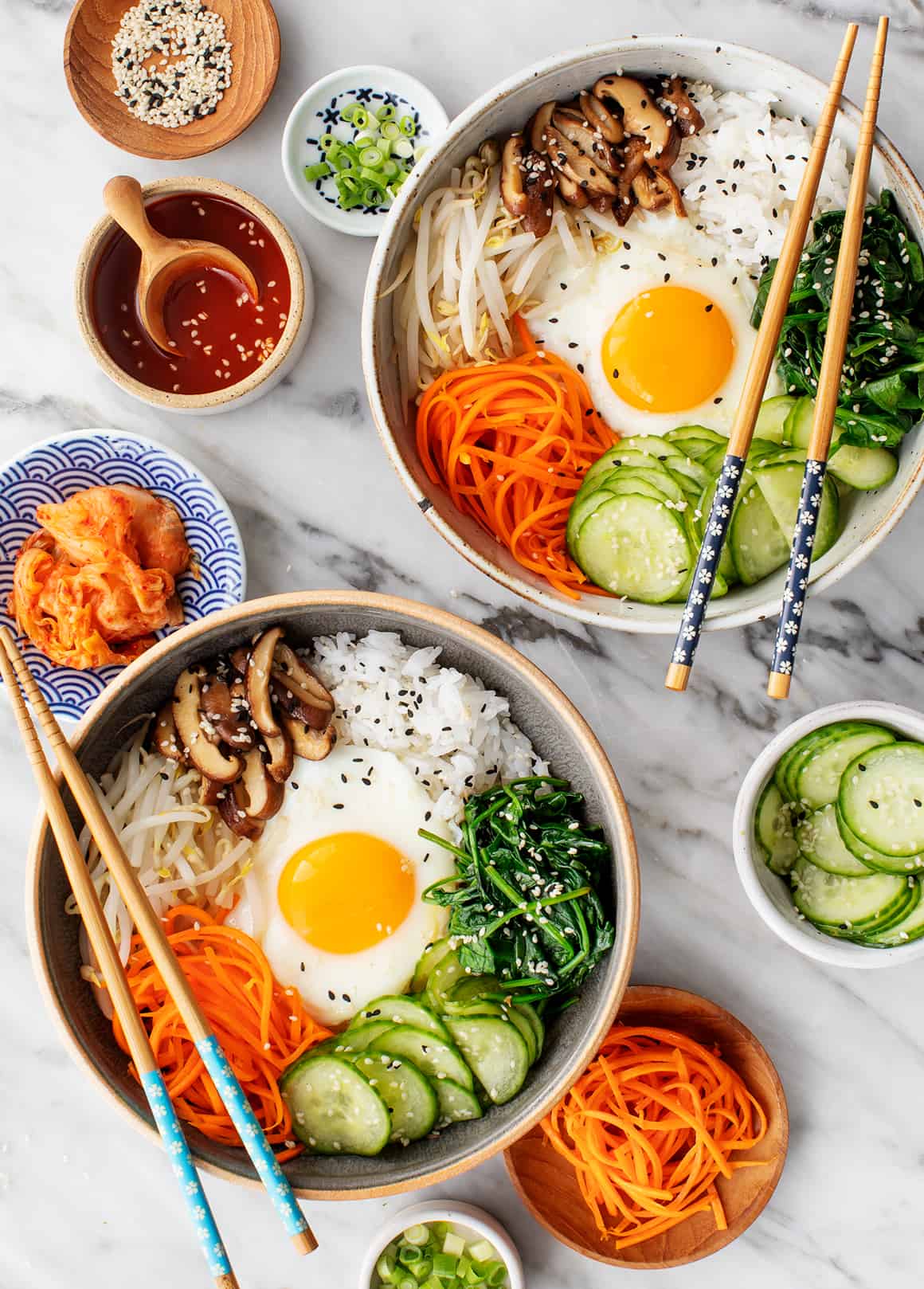
This bibimbap recipe might be my favorite rice bowl I’ve ever made…and I’ve made a lot of them! My spin on Korean bibimbap, it consists of white rice topped with seasoned vegetables and a fried egg. I serve it with a sweet and spicy bibimbap sauce that absolutely PACKS this bowl with flavor. It’s delicious—I hope you try it!
What is bibimbap?
Bibimbap is one of the most well known Korean dishes. It’s a rice bowl topped with assorted vegetables, spicy gochujang, and an egg and/or meat, often beef. Each component contributes something unique to the bowl—think richness, heat, or crunch. The components are meant to be mixed together before eating—the Korean word “bibimbap” translates to “mixed rice” in English.
Of course, my recipe is meat-free, but the vegetables and punchy sauce still fill it with a fabulous combination of textures and flavors.
 Ingredients
My bibimbap recipe starts with two base components:
- Rice – White rice is traditional for bibimbap, but brown rice or cauliflower rice would work here too.
- A fried egg – Traditional bibimbap is sometimes topped with a raw egg yolk, but I like to use a cooked sunny side up egg on mine. If you’re vegan, skip the egg, or replace it with baked tofu or tempeh.
Bibimbap Vegetables
Then, I add the veggies! I like to use these:
- Cucumber – I thinly slice cucumber and marinate it with rice vinegar and sesame oil to give it tangy, nutty flavor.
- Bean sprouts – Lightly blanched, they add a delicious crunch to this bowl.
- Shredded carrots – I lightly sauté them in sesame oil so that they soften just slightly. I use my julienne peeler to cut the carrots here, but if you don’t have one, grated carrots will work just as well.
- Sautéed shiitake mushrooms – To highlight their rich umami flavor, I cook them with a little rice vinegar and tamari or soy sauce.
- Sautéed spinach – Sesame oil and tamari or soy sauce give it toasty, savory flavor. Make sure to squeeze the excess liquid out of the spinach after you cook it so that your bibimbap isn’t watery.
Find the complete recipe with measurements below.
My Bibimbap Sauce
Bibimbap is typically served with some type of gochujang sauce. Gochujang is a Korean fermented chili paste with a bold sweet, spicy, and umami flavor.
For this recipe, I make a simple bibimbap sauce out of gochujang, rice vinegar, sesame oil, and maple syrup. Sweet, spicy, and a little funky, it adds amazing flavor to this rice bowl! See my gochujang sauce recipe to learn more about it.

Assembling and Eating Bibimbap
To make this recipe, start by cooking the rice. Use my method for how to cook rice on the stove, or make Instant Pot rice if you prefer.
Meanwhile, prep the remaining components:
- Whisk together the sauce.
- Prep the veggies. Start with the cucumber so that it has time to marinate. Then, blanch the bean sprouts, and sauté the carrots, mushrooms, and spinach.
- Lastly, fry the eggs.
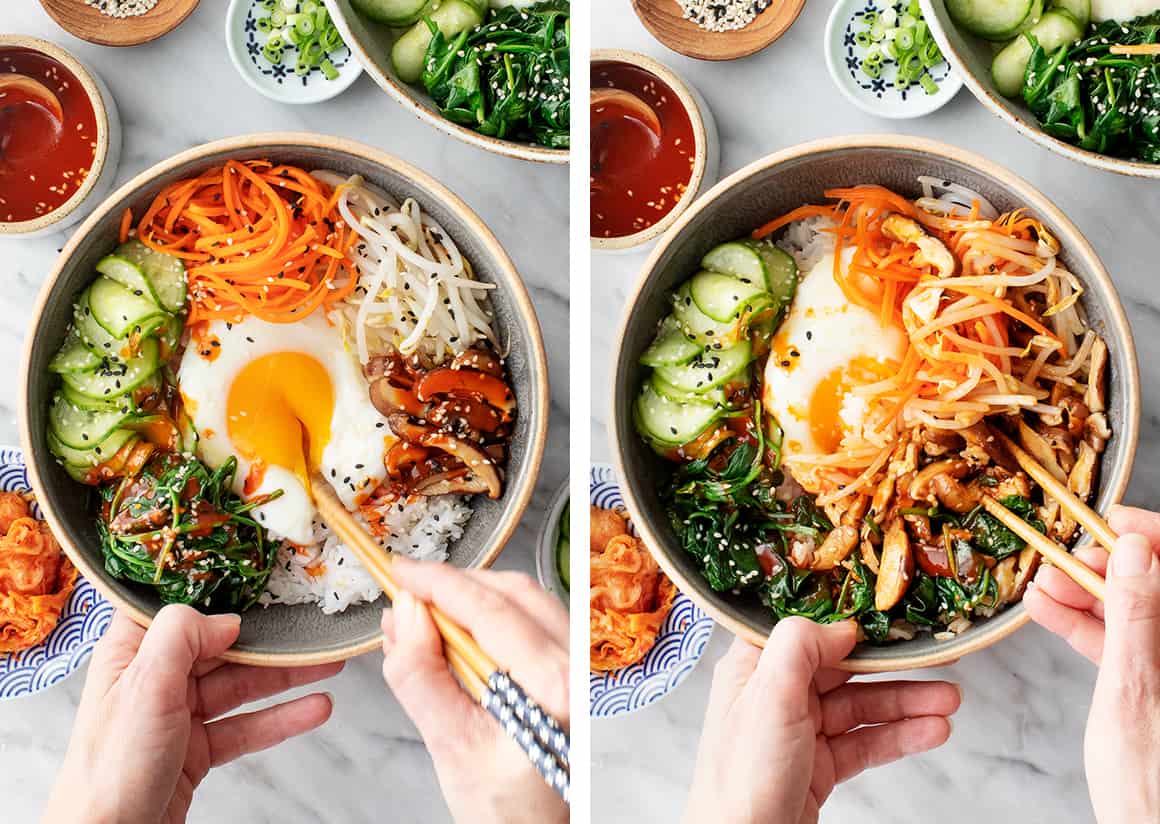
Once the components are ready, you can assemble the bowls. Fill each with a base of cooked rice, and top it with an egg. Place the vegetables in sections around the perimeter of the bowl, surrounding the egg, and drizzle with the sauce.
When you’re ready to eat, break the egg yolk and mix the components together. The runny egg yolk and sauce will combine to coat the rice and veggies, which makes the bowl really flavorful and fun to eat.
I like to serve my bibimbap with extra sauce, sliced green onions, and kimchi on the side and mix them in as I eat. Feel free to skip these components, or add them to your bowl from the get-go. Again, this recipe is flexible, so customize it to create a bowl you love!
Find the complete recipe with measurements below.
Tip: These bibimbap components are simple to make, but prepping them all at once takes time.
Get ahead by prepping the sauce and veggies in advance. They’ll keep well in the fridge for up to 3 days.