Kimbap (or gimbap) is one of Korea’s most beloved grab-and-go meals. It's colorful, nutritious, and endlessly customizable. Whether you’re packing a picnic, craving a quick lunch, or exploring Korean cuisine, this simple kimbap recipe will walk you through the essentials.
🤔 What Is Kimbap?
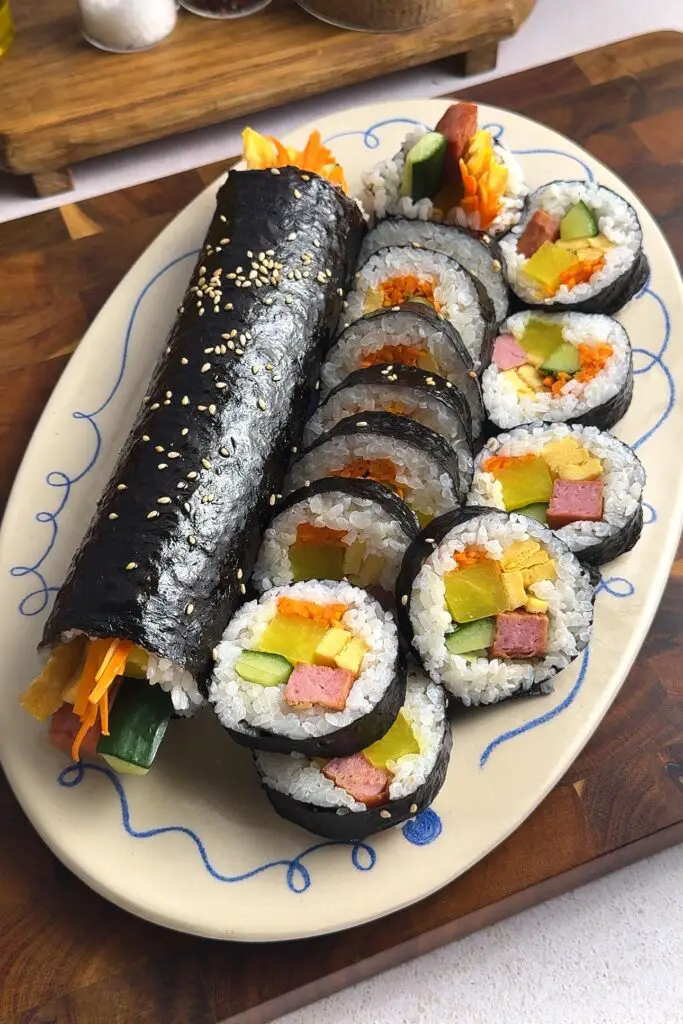
Kimbap (김밥) literally means "seaweed rice." It’s a Korean dish made from steamed white rice and assorted fillings rolled in gim (seaweed). Think of it as Korea’s answer to a perfectly portable meal — nutritious, neat, and totally adaptable.
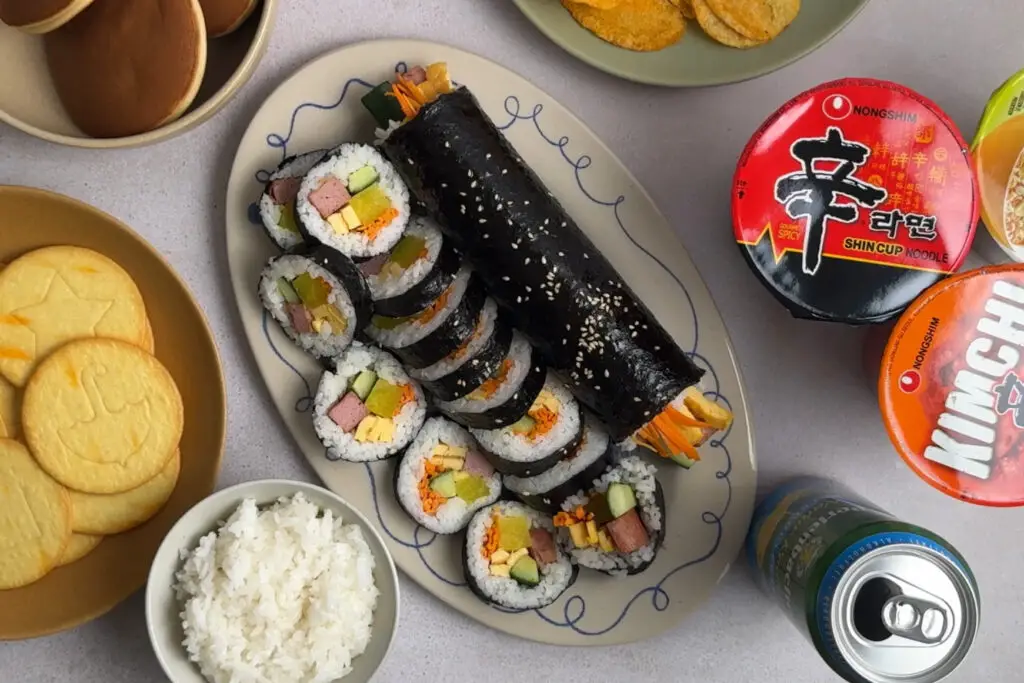
Common fillings include vegetables, pickled radish, egg, seasoned beef, or even tuna. Kimbap is typically sliced into bite-sized rounds and served cold or at room temperature. It’s a favorite in school lunches, on hikes, or as a quick street food snack.
The terms kimbap and gimbap refer to the same dish — the spelling just depends on Korean romanization rules.
🎤 Rumi’s Kimbap in Kpop Demon Hunters
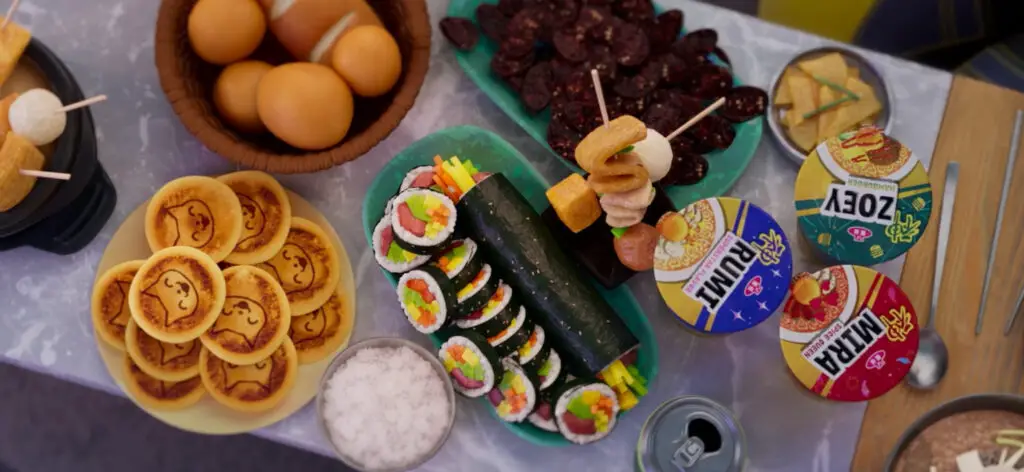
If you're a fan of the animated film Kpop Demon Hunters, you might have noticed Rumi, one of the main characters, snacking on kimbap.
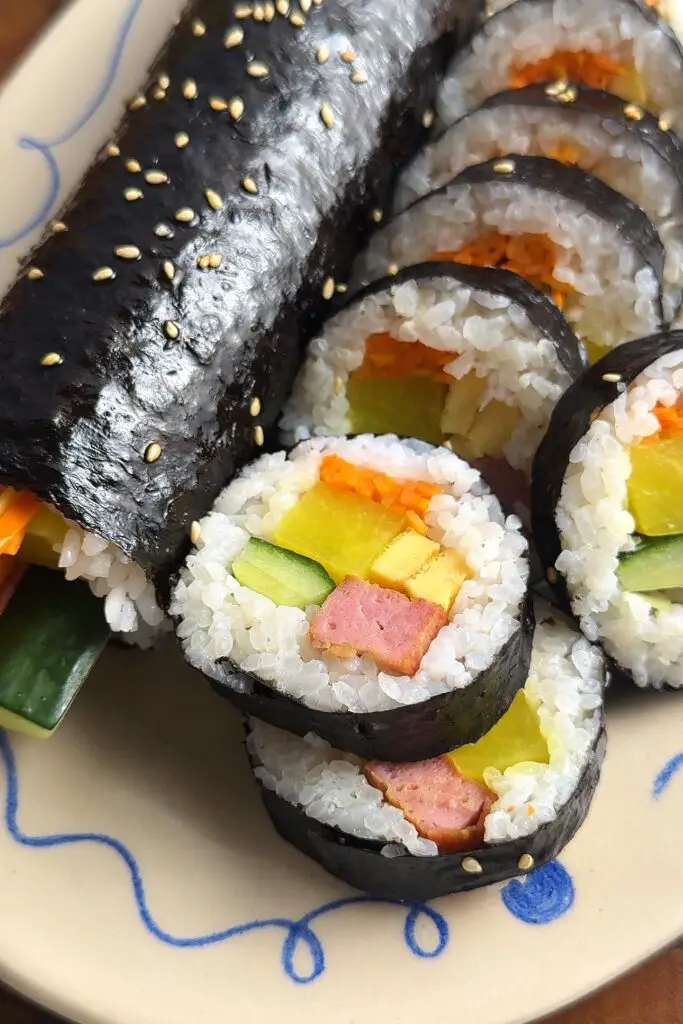
Her kimbap isn’t just a snack — it’s a symbol of comfort, heritage, and home-cooked care. The animators even gave a close-up of the roll: beautiful layers of rice, egg, pickled radish, and savory filling.
It’s a fun cultural touch and a sweet reminder that even pop idols need soul food.
Disclaimer: This post is not sponsored. I don’t own the animated images below — they’re used only as references from Kpop Demon Hunters on Netflix.
| Feature | Kimbap (Korean) | Sushi (Japanese) |
|---|---|---|
| Rice seasoning | Lightly oiled or plain | Seasoned with vinegar and sugar |
| Fillings | Cooked ingredients: Spam, egg, veggies | Often includes raw fish |
| Flavor profile | Savory, sweet, and hearty | Tangy, delicate, and umami-rich |
| Serving style | Eaten as a whole roll or sliced bites | Often smaller rolls or nigiri |
| Seaweed | Gim (often roasted and seasoned) | Nori (unseasoned) |
So while sushi and kimbap may look like cousins, they’re culturally and culinarily distinct!
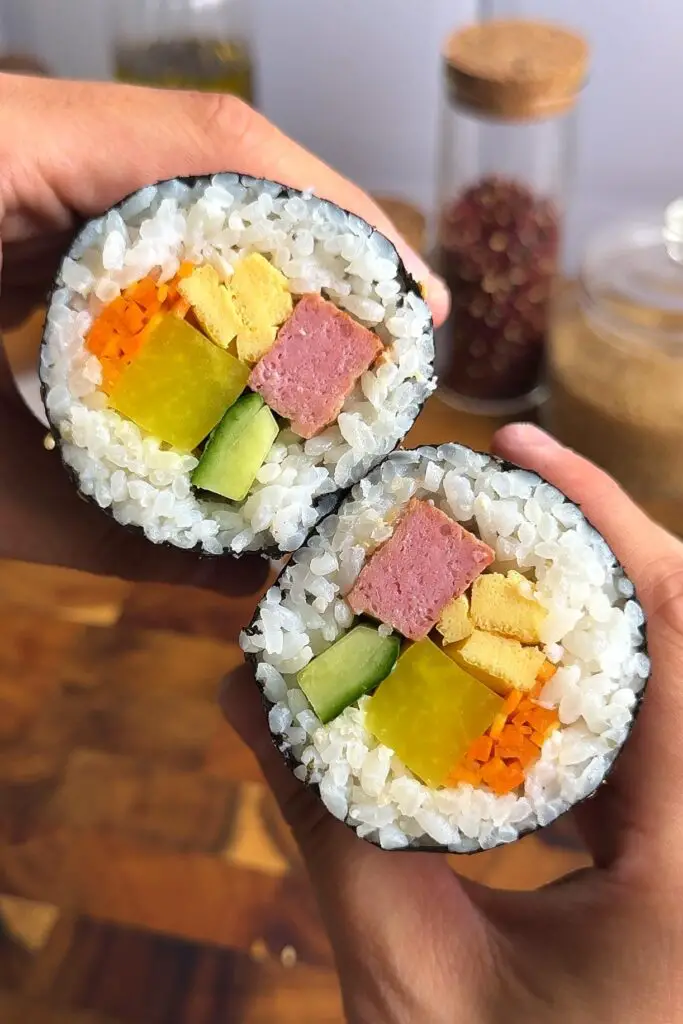
🛒 Ingredients
Here’s what you’ll need to make classic Korean kimbap at home:
-
Eggs – Lightly beaten and cooked into a thin omelet, then sliced.
-
Cucumber – Adds refreshing crunch. Remove the seeds if you like a drier texture.
-
Carrots – Julienned, salted, and lightly sautéed for sweetness and color.
-
Pickled yellow radish (danmuji or takuan) – Sweet, tangy, and vibrant.
-
Beef strips, chicken breast, or tuna – A savory, flavorful protein that pairs beautifully with rice and vegetables.
-
Short-grain white rice – Sticky rice helps hold the roll together perfectly.
-
Seaweed (gim or nori) – Gim (김) is roasted Korean seaweed; nori is the Japanese version. Both work great.
-
Sesame oil & sesame seeds – Brushing with sesame oil adds shine and nutty aroma, while sesame seeds bring a hint of crunch.
🔍 Korean vs Japanese Ingredients:
While some components overlap with sushi (like rice and seaweed), the flavor approach differs. Kimbap rice is lightly oiled instead of vinegared, and the fillings are cooked, hearty, and often seasoned.
See recipe card for quantities.
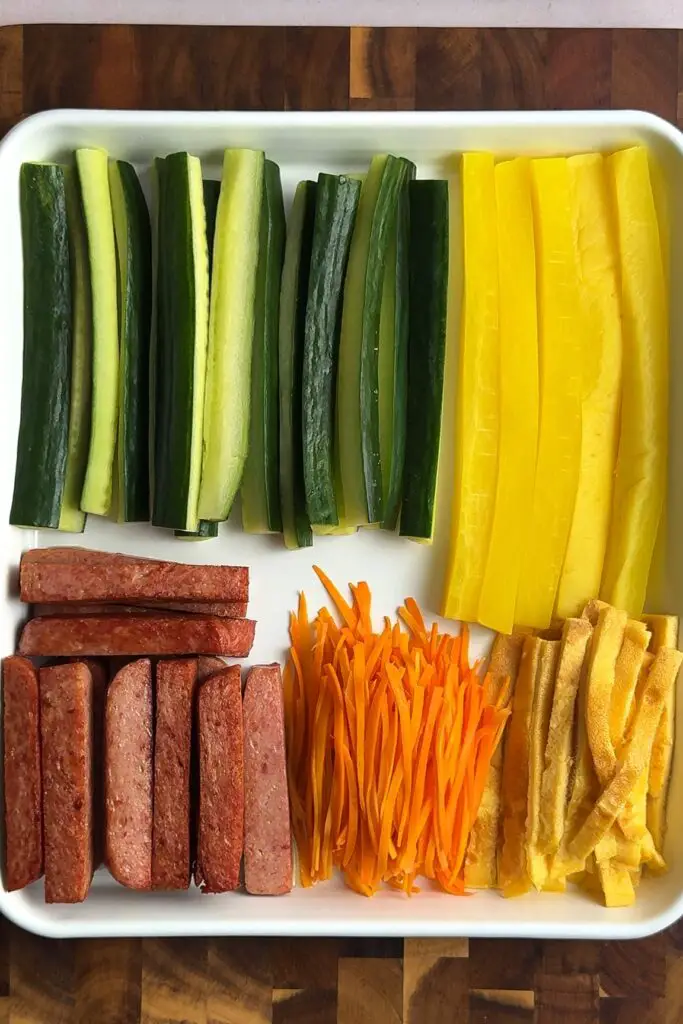
📖Instructions

Step 1: Prepare the egg and vegetables
Beat the eggs and cook in a lightly greased pan until set. Slice into thin strips.
Cut the cucumber, carrots, pickled radish, and protein into long, thin strips.

Step 2: Season and cook
Toss the carrots with 1 tablespoon of salt and let sit for 15 minutes. Squeeze out moisture, then sauté for 4 minutes.
In the same pan, add a little vegetable oil and cook your protein (beef, chicken, or tuna) until golden and fragrant.
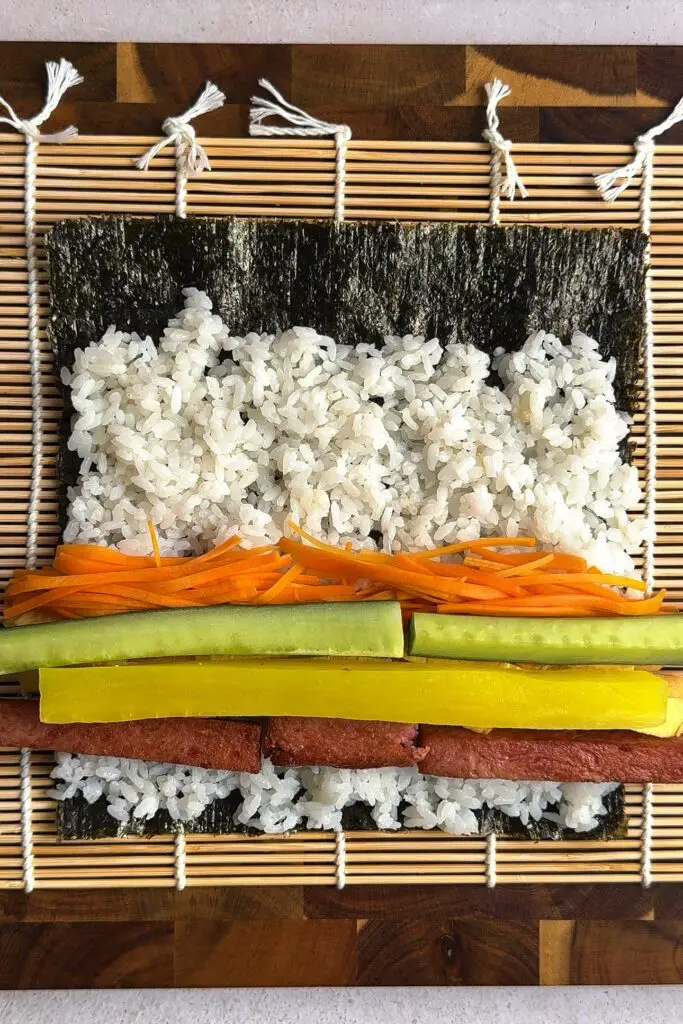
Step 3: Assemble the kimbap
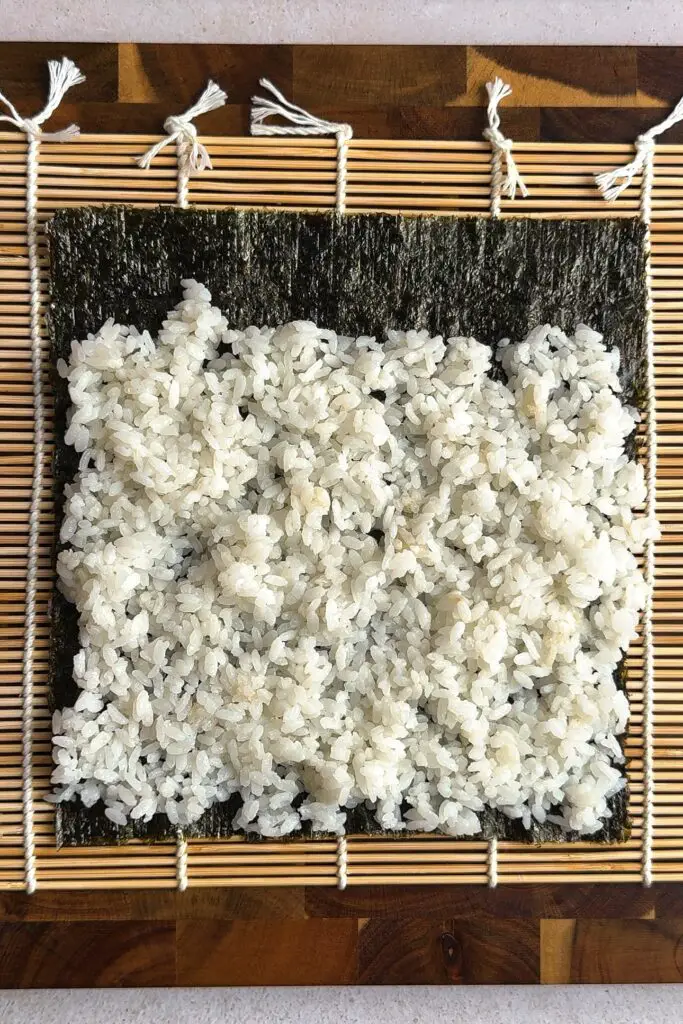
Lay a sheet of seaweed shiny-side down on a bamboo mat.
Wet your fingers and spread a thin layer of rice, leaving 2 cm (1 inch) at the top edge.
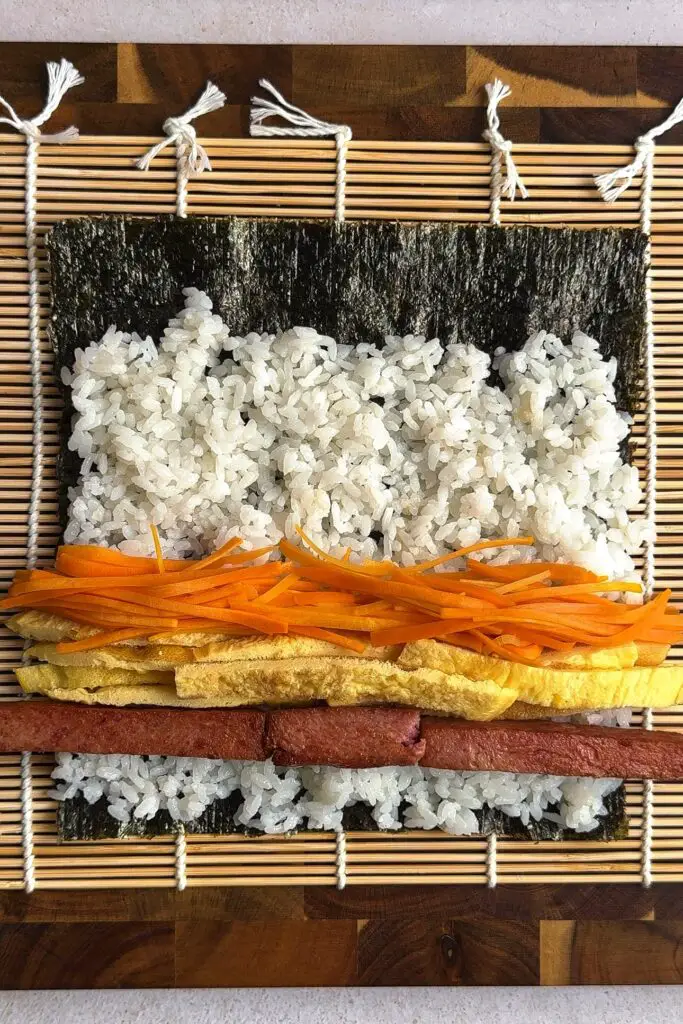
Arrange a few strips of each ingredient across the center, then roll tightly with the mat. Seal the edge using a few grains of rice as glue.
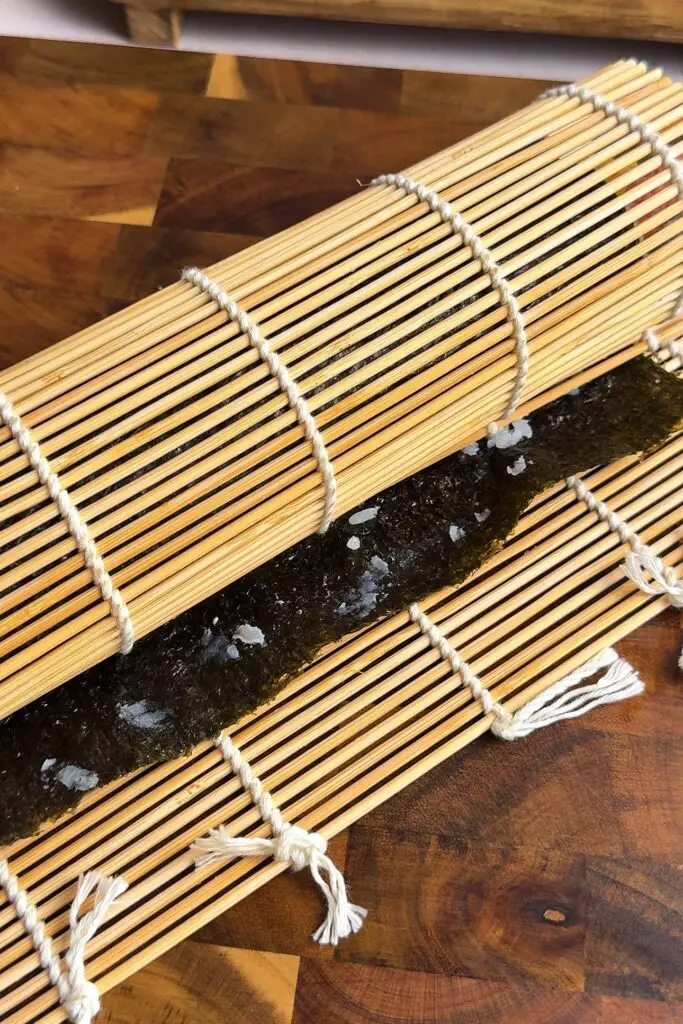
Step 4: Finish and serve
Brush the roll lightly with sesame oil and sprinkle sesame seeds on top.
Slice into bite-sized rounds with a damp knife for clean cuts.
💡 Tip: Roll tightly so the filling stays intact when sliced!
Hint: Roll the kimbap really tightly so that it doesn't fall apart!
🔁 Substitutions
Protein: Use bulgogi beef, grilled chicken, tofu, or tuna.
-
Danmuji: Substitute with cucumber pickles.
-
Rice: Use sushi rice or Calrose rice if needed.
-
Gim: Nori sheets work perfectly too.
🧬 Variations
Cheese Kimbap – Add a slice of cheese for creamy texture.
-
Tuna Mayo Kimbap – Mix canned tuna with a little mayo.
-
Kimchi Kimbap – Add stir-fried kimchi for a spicy, tangy kick.
-
Vegetable Kimbap – Skip the meat and pack it with tofu, mushrooms, or spinach.
Equipment
Bamboo mat – For rolling.
-
Sharp knife – Dip in water for smooth slices.
-
Rice paddle – For spreading rice evenly.
-
Nonstick skillet – For eggs and protein.
Storage
Kimbap tastes best fresh, but you can store it up to 24 hours in the fridge.
Wrap tightly in plastic wrap or foil and place in an airtight container.
Let it sit at room temperature for 15–20 minutes before eating for the best texture.
Top Tip
Don’t overfill! Keeping ingredients minimal makes rolling easier and prevents tearing. Balance is everything.
Frequently Asked Questions