
Bok choy with chili garlic soy sauce recipe
Bok Choy Kimchi is a quick and easy Korean side dish with no fermentation required—enjoy it right away! This healthy and refreshing banchan is full of fiber and packs a lot of flavor. It’s tangy, spicy, crisp, and FRESH!
You’ll find tips on using regular or baby bok choy with vegetarian or vegan ingredient options. For another quick kimchi, try my cucumber kimchi. If you prefer fermented kimchi, this gluten-free napa cabbage kimchi is for you!

Crunchy refreshing baby bok choy kimchi ready in 15 minutes
Ingredients
Kimchi with bok choy is quicker and easier than fermented cabbage kimchi. It’s packed with flavorful ingredients but is a crunchy fresh kimchi alternative that can be enjoyed right away. Here’s what you need to make this kimchi bok choy recipe:
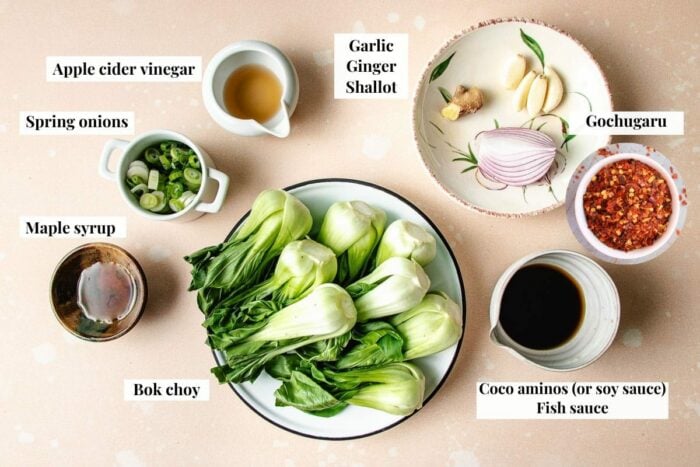
Base ingredients:
- Baby bok choy: You can also use regular-sized bok choy. For baby bok choy kimchi, slice it in half. Dice regular-sized bok choy.
- Red onion: Thinly slice them and be careful not to add too many or it’ll be spicy.
- Spring onion: Or green onion
For the sauce:
- Garlic cloves
- Ginger: Use a small knob, grated. Too much will overpower the dish.
- Coconut aminos: You can also use soy sauce or gluten-free tamari.
- Coarse sea salt
- Fish sauce: If you are vegan or vegetarian, use a vegetarian fish sauce.
- Gochugaru: These are Korean red pepper flakes (red chili flakes). This is a must-have ingredient for an authentic flavor and should not be substituted.
- Maple syrup and apple cider vinegar: An alternative workaround for Korean plum vinegar, which is sweet and tangy.
For the garnish:
- Toasted white sesame seeds
- Toasted sesame oil
Substitutions and variations
- Add an apple: If you don’t want to use maple syrup, apples will add sweetness to the dish. Add it to a blender or food processor with sauce ingredients and blend until creamy.
- Plum vinegar: You can use this in place of maple syrup and apple cider vinegar.
- Vegan fish sauce or Yondu seasoning (a South-Korean brand of all-purpose, savory umami seasoning) will keep this recipe vegan/vegetarian.
How to make this dish
This bokchoy kimchi is quick and easy! Unlike kimchi cabbage, it is a quick kimchi or geotjeori (겉절이). A geotjeori is a fresh, salted side dish that doesn’t undergo fermentation, making for a short prep time.
Here are the instructions for this dish:
- PREP: Halve the baby bok choy, rinse, drain, and pat them dry. Thinly slice the onion and chop the spring onions. (If using larger-sized bok choy, separate the leaves and stems. Cut them in half and then crosswise to make small pieces.)
- SAUCE: In a separate bowl, combine the sauce ingredients from garlic to vinegar.
- MIX: Combine and gently toss.
- For baby bok choy (halved): In a large mixing bowl, add the bok choy, onion, and sauce. Gently toss to combine. Take care not to bruise the leaves.
- For larger bok choy (diced): Add the bok choy stalks, onion, and half the sauce to the mixing bowl. Toss to combine and rest for 2 minutes. Then add the leaves and the remaining sauce to combine for 1 min.
- SERVE: Transfer them onto a large serving plate and sprinkle with sesame seeds, sesame oil, and scallions. Serve right away at room temperature or chill in the fridge for up to 2 weeks. (For the crunchies kimchi, consume within 2-3 days.)
NOTES:
- When you first combine the bok choy with the sauce, they will seem dry. Gently toss to distribute the seasoning evenly. The bok choy will continue releasing water as they marinate, creating a saucier consistency.
- Select bok choy with firm stalks. They will be juicer, crunchier, and last longer!
Which types of bok choy to use
I recommend using Shanghai bok choy with green stalks and leaves or dwarf bok choy with white stalks and green leaves.
Because bok choy stalks are firm and the leaves are tender, they require different preparation methods -especially if you use regular-sized bok choy.
- Baby bok choy (4 to 5 inches in length) – Slice it in half to make kimchi.
- Regular-sized bok choy (8 to 9 inches in length) – Separate the bok choy into leaves and stems. Cut in half and then crosswise to make small pieces.
Learn more about bok choy and how to cut bok choy from my helpful guides!
How to make ahead and store leftovers
Because this easy kimchi is not fermented, eat it within a few days or up to 2 weeks. It’s great for a smaller batch that can be consumed on the same day.
- To store: Store in the fridge in jars with a tight lid for up to 2 weeks. The kimchi will continue to ferment slowly in the fridge and the texture will turn softer.
- To make ahead: Pack the sauce and the bok choy separately. Combine them before serving.
What to serve with bok choy kimchi
This spicy and tangy Korean bok choy salad is a refreshing addition to any Asian meal! It also works great in recipes that call for Korean kimchi flavor.
- Side dish: It pairs perfectly with this delicious Kalbi (Korean BBQ beef short ribs).
- Topping: Use it as a topping on my vegetarian bibimbap recipe or this low-carb kimchi cauliflower fried rice.
- As an ingredient: Dice it up and mix it into pancake batter to make a keto kimchi pancake or toss it with Korean cucumber salad.
- Make a kimchi stir-fry: You can use it for a bok choy version of kimchi beef stir fry or kimchi chicken stir fry.
Umami Tips
- Quality Ingredients: Select bok choy with firm stalks and bright green leafy greens for maximum crunch.
- Seasoning balance: The balance of seasonings (like garlic, ginger, fish sauce, and Korean chili flakes) is crucial. Feel free to adjust it to your personal taste.
- Vegan and vegetarian option: Swap out the fish sauce for a vegetarian alternative fish sauce or use Yondu vegetable seasoning.
- Add sweetness: If you prefer it sweeter, adding a bit more maple syrup or apple can help balance the heat.
- Storage: Since it’s a quick kimchi, you can serve it right away or store it in the fridge for up to 2 weeks. It’s best eaten fresh!
- Marinate: If you prefer a bit of fermented bok choy flavor with extra probiotics for gut health, let it marinate for at least a few hours before serving.
- Sanitation: Always use clean utensils to pick out kimchi from the jar so it can last longer.
Remember, kimchi bok choy is meant to be enjoyed fresh, unlike its fermented kimchi cabbage counterpart. It’s best consumed within a few days or up to two weeks.


