
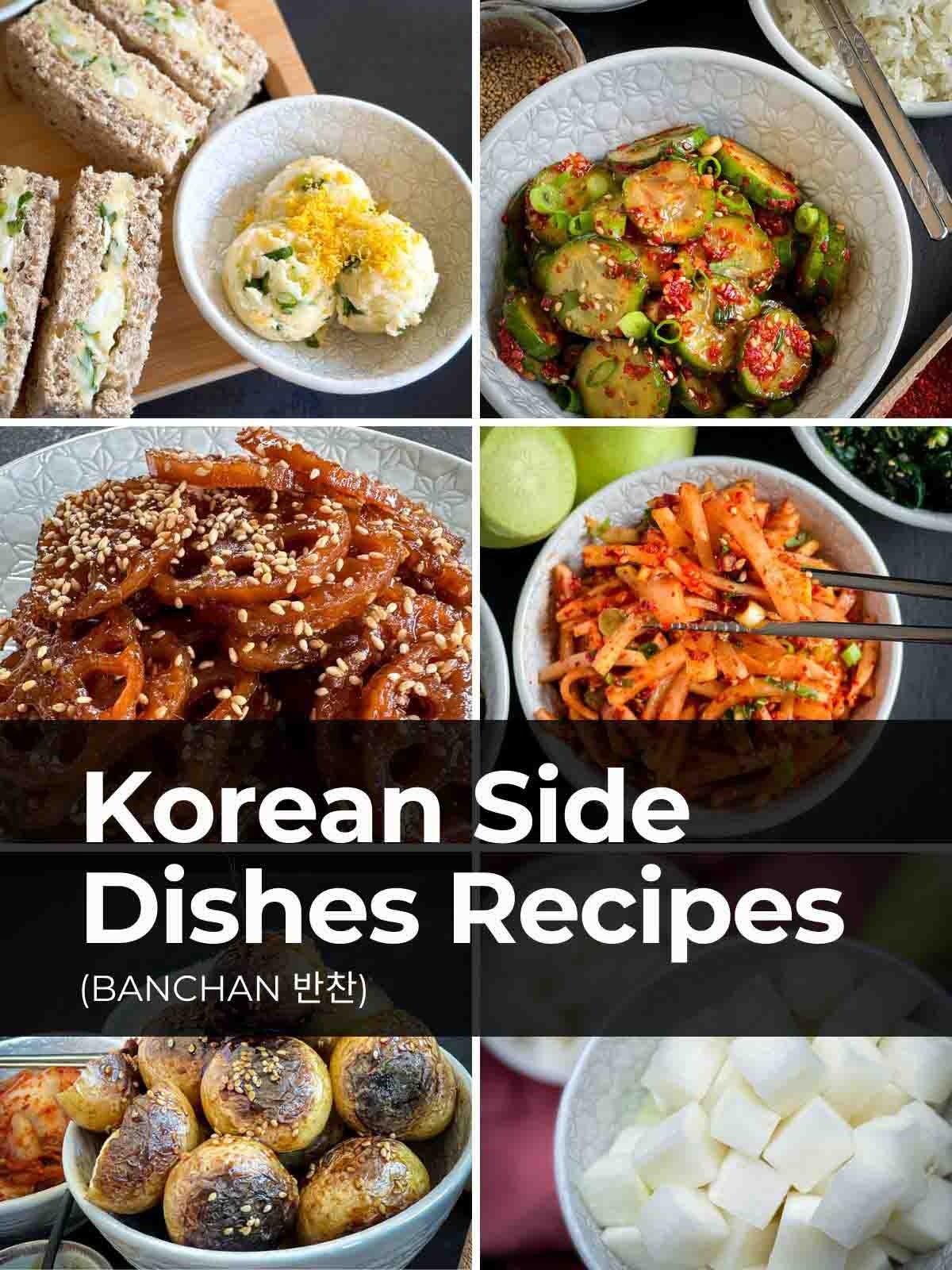
“Banchan” in Korean translates to side dishes.
If you’ve ever had the pleasure of dining in a Korean restaurant or perhaps been invited over for dinner in a traditional Korean home, you would have no doubt been presented with a meal that started with a whole bunch of small plates.
For most people, our first Korean cuisine experience would have been the Korean BBQ, and if you’ve ever wondered what all the sides are at Korean BBQ, well, they are called banchan.
Banchan, although served before the main fare, is not considered to be an appetiser or an entrée that is to be finished before you move onto the main dish. Instead, these Korean side dishes are there to complement and enhance the overall meal.
They are small in serving size as there are many other banchan on the table, and they are communal. What I love most about banchan is that it can be replenished throughout the meal and that restaurants do not charge for these side dishes.
The most widely eaten banchan of all is the world renowned napa cabbage kimchi. This fermented Korean side dish flies the flag for Korean cuisine and is abundantly available all around the world.
While not traditional, many who celebrate Chinese New Year crave for something different to eat during the 15 days of festivities. Apart from the significant days, you can try your hand at Korean for the purposes of catching up with family and friends within those 2 weeks.
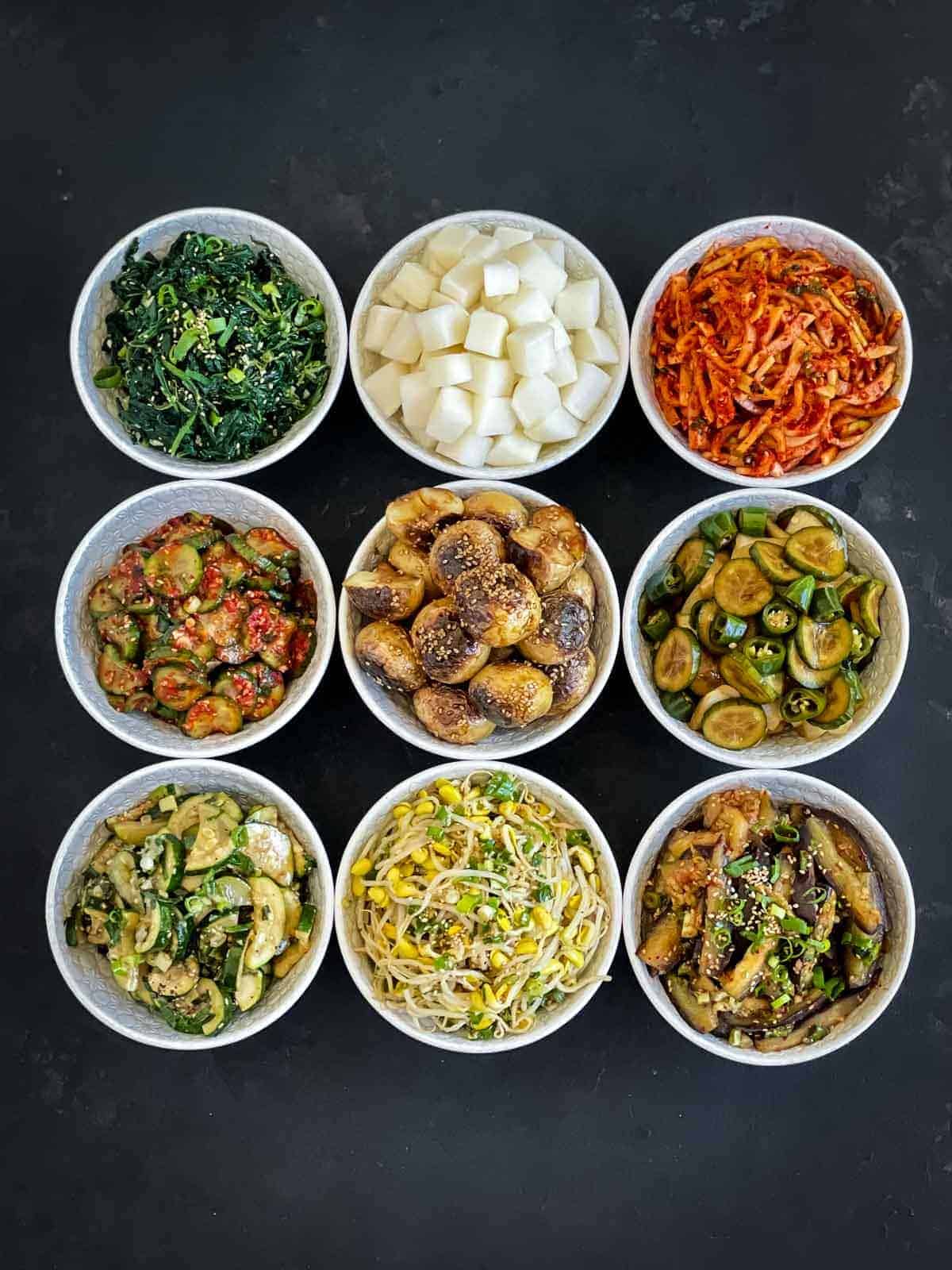 Korean Side Dishes (Banchan) in a Nutshell
A delicious collection of authentic Korean side dish recipes (banchan) — from spicy kimchi and sesame vegetables to soy-glazed potatoes and seasoned spinach.
Each dish is simple, flavour-packed, and designed to complement rice, noodles, or grilled meats. Explore easy Korean banchan recipes that bring colour, balance, and variety to every meal.
What Are Some of The Most Popular Korean Side Dishes?
Korean cuisine is very much a cuisine we love to eat, and learning to make traditional Korean dishes at home is something we should all try and do more of.
Although I have to admit, I found it intimidating at first but the idea of serving up homemade side dishes to my family and friends was very appealing.
So, apart from kimchi, I decided to tackle 1 banchan at a time, and I selected some of my favourites. As I made them, I realised that they all fundamentally have a similar starting point, and they were not difficult at all!
In fact, Korean side dishes recipes are quite easy, and it was so much fun serving these up.
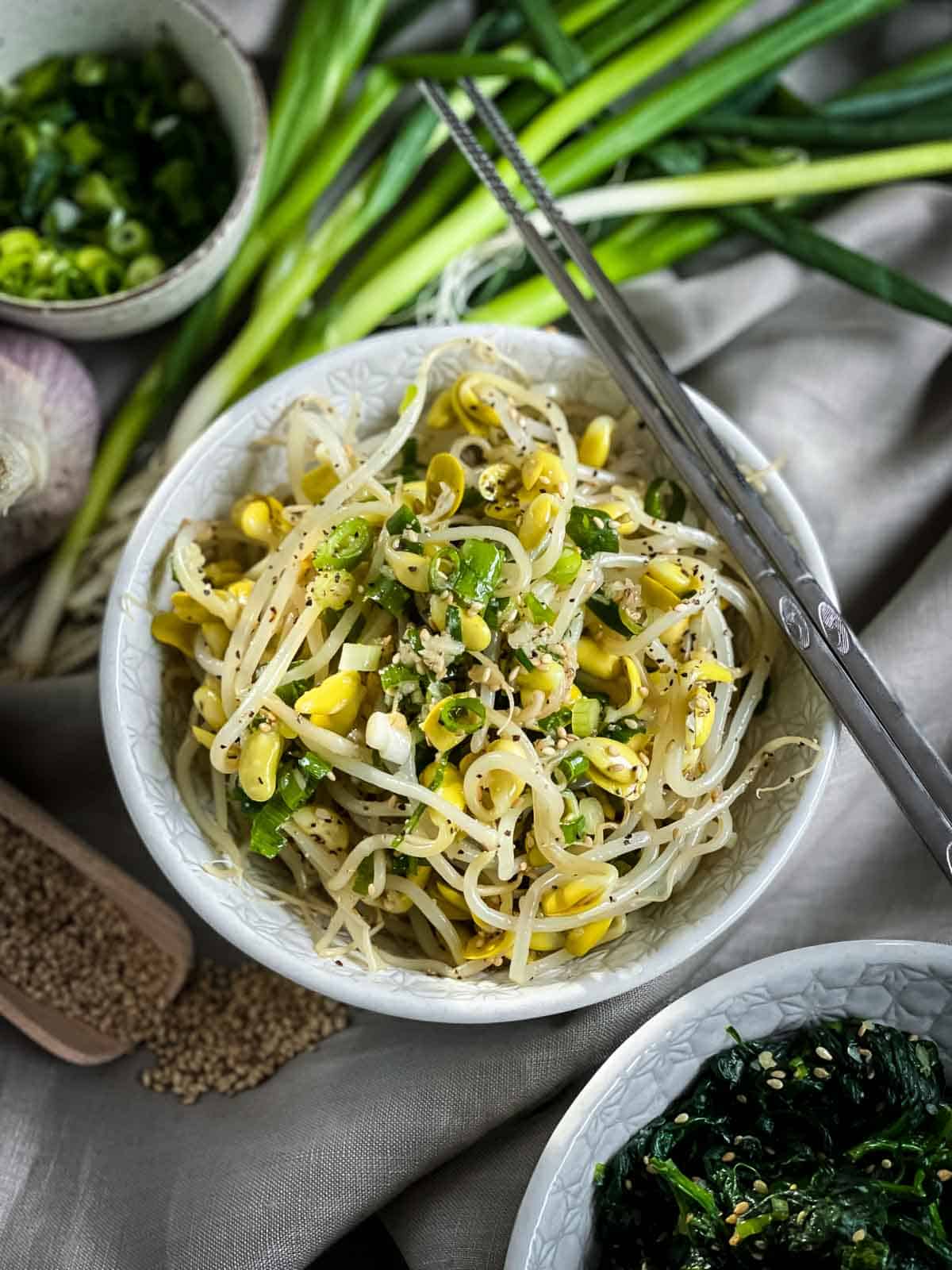
Korean Soybean Sprout Side Dish – Kongnamul Muchim (콩나물 무침)
1/15
Soybean sprouts are very popular in Korean cuisine. This side dish is done in 10 minutes, subtle in flavour, and you can make a spicy or non-spicy version. It is light, slightly crunchy and well-seasoned.
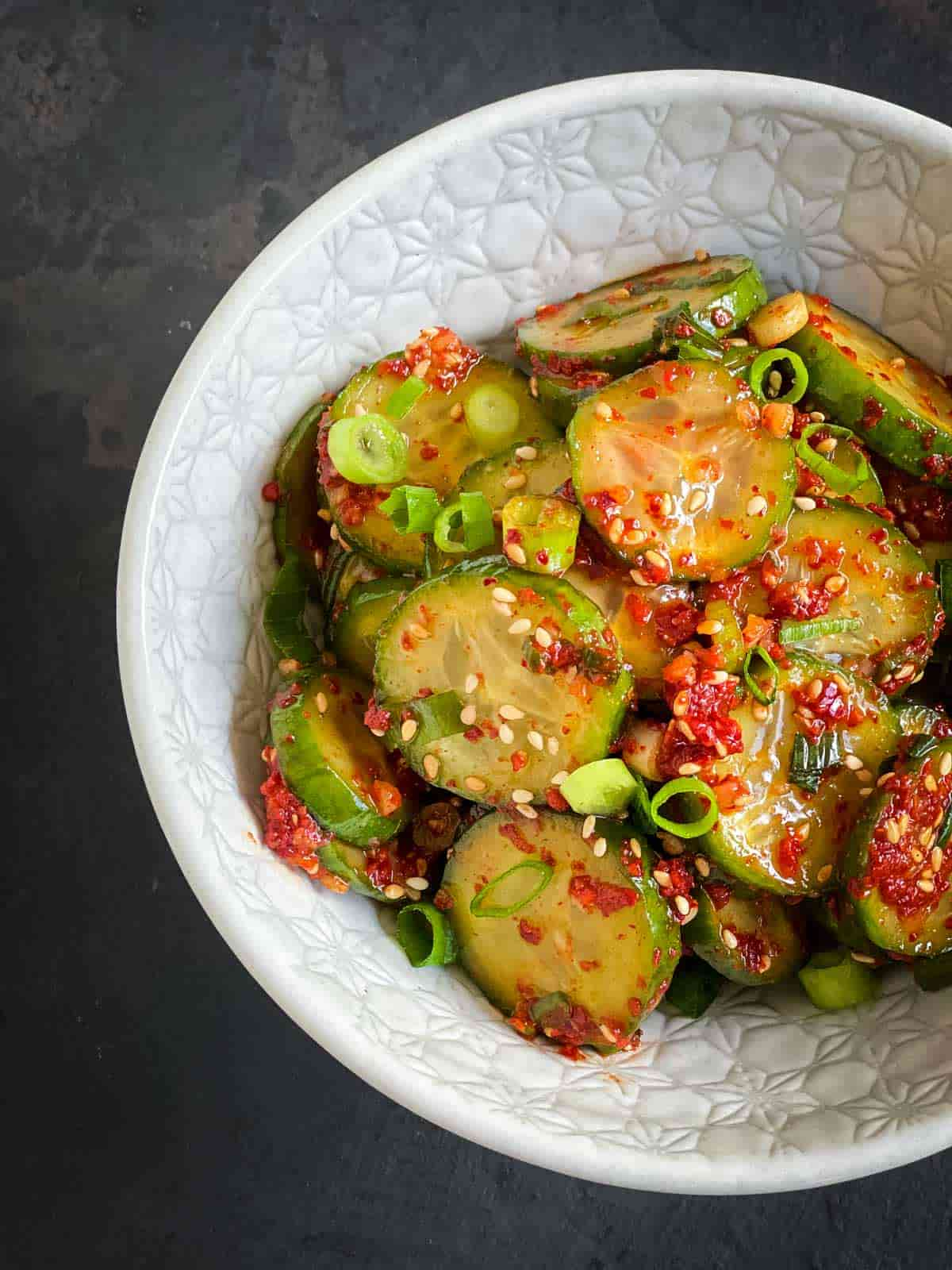
Korean Cucumber Salad – Oi Muchim (오이무침)
2/15
A staple in the repertoire of Korean side dishes, this Korean cucumber salad (oi muchim) is incredibly easy to make with no cooking required. Spicy, aromatic and crunchy, watch it get devoured in seconds!
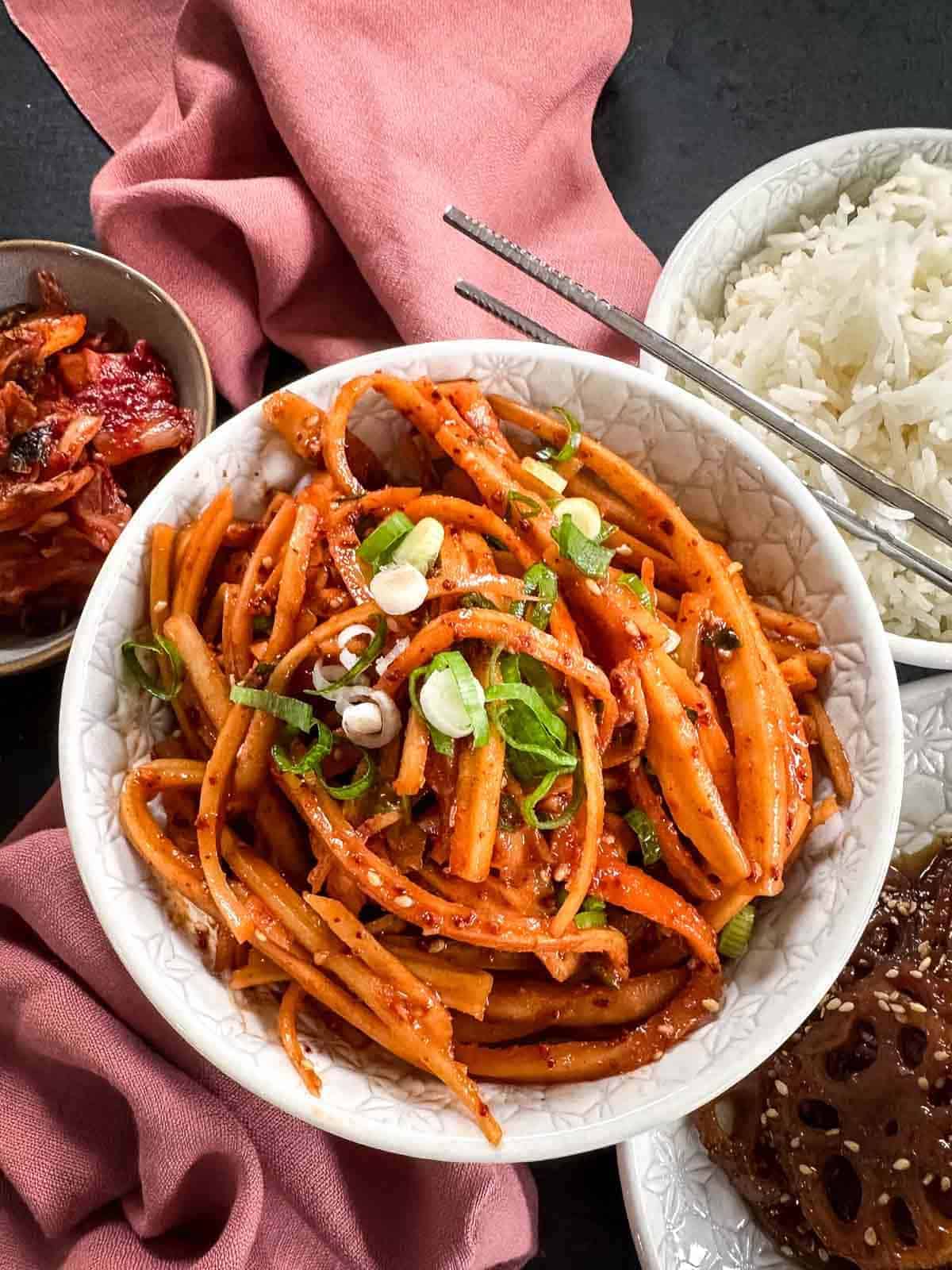
Korean Bellflower Root Side Dish – Doraji Muchim [도라지무침]
3/15
Doraji Muchim is calling your name! This Korean side dish bursts with flavour, featuring crunchy bellflower root, tangy vinegar, and a fiery kick.
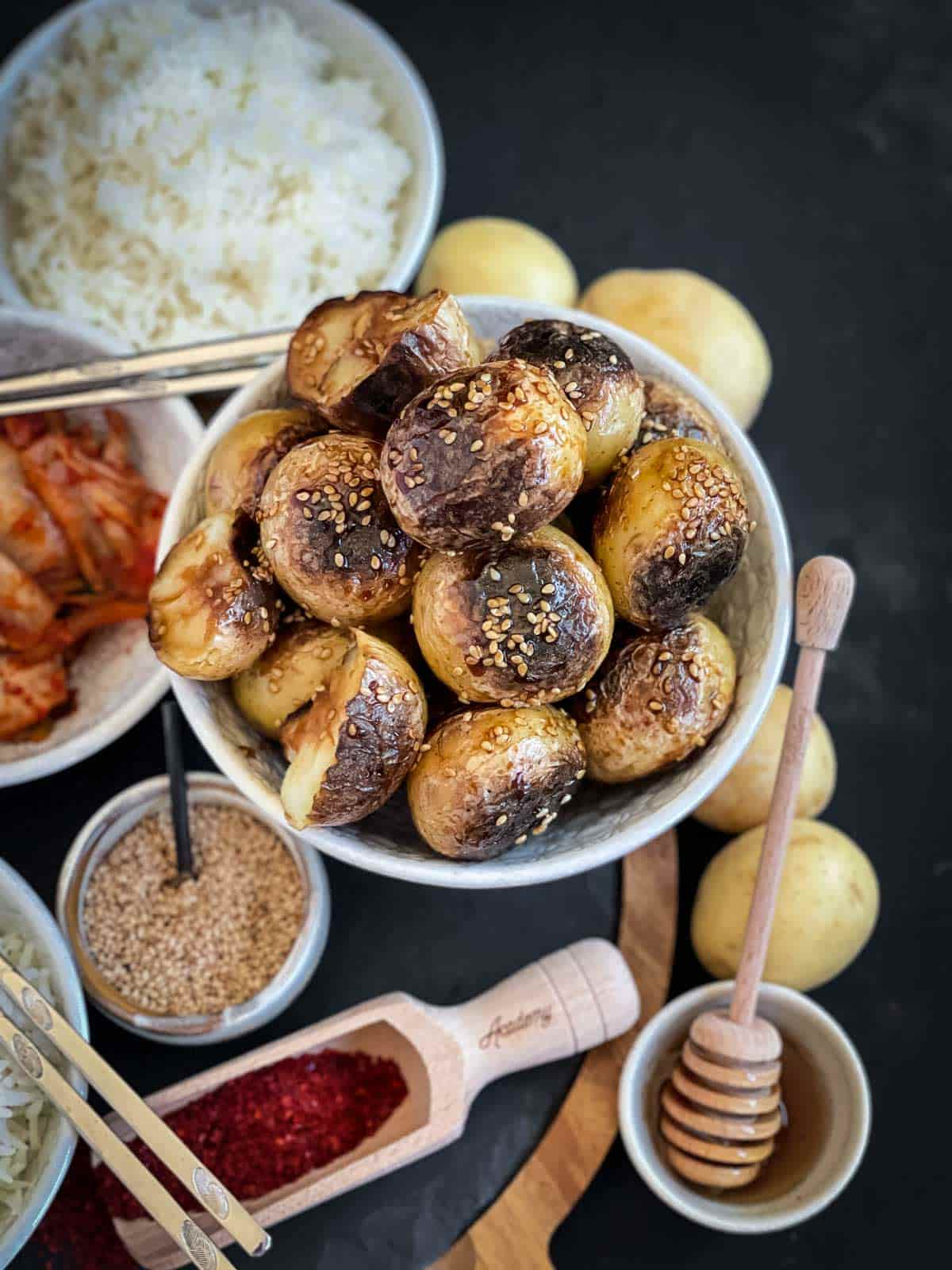
Korean Braised Potatoes – Gamja Jorim (감자조림)
4/15
What could be more tantalising than sweet and sticky baby potatoes braised to absolute perfection? This Korean braised potato side dish is slightly charred and crispy on the outside while soft and warm on the inside.
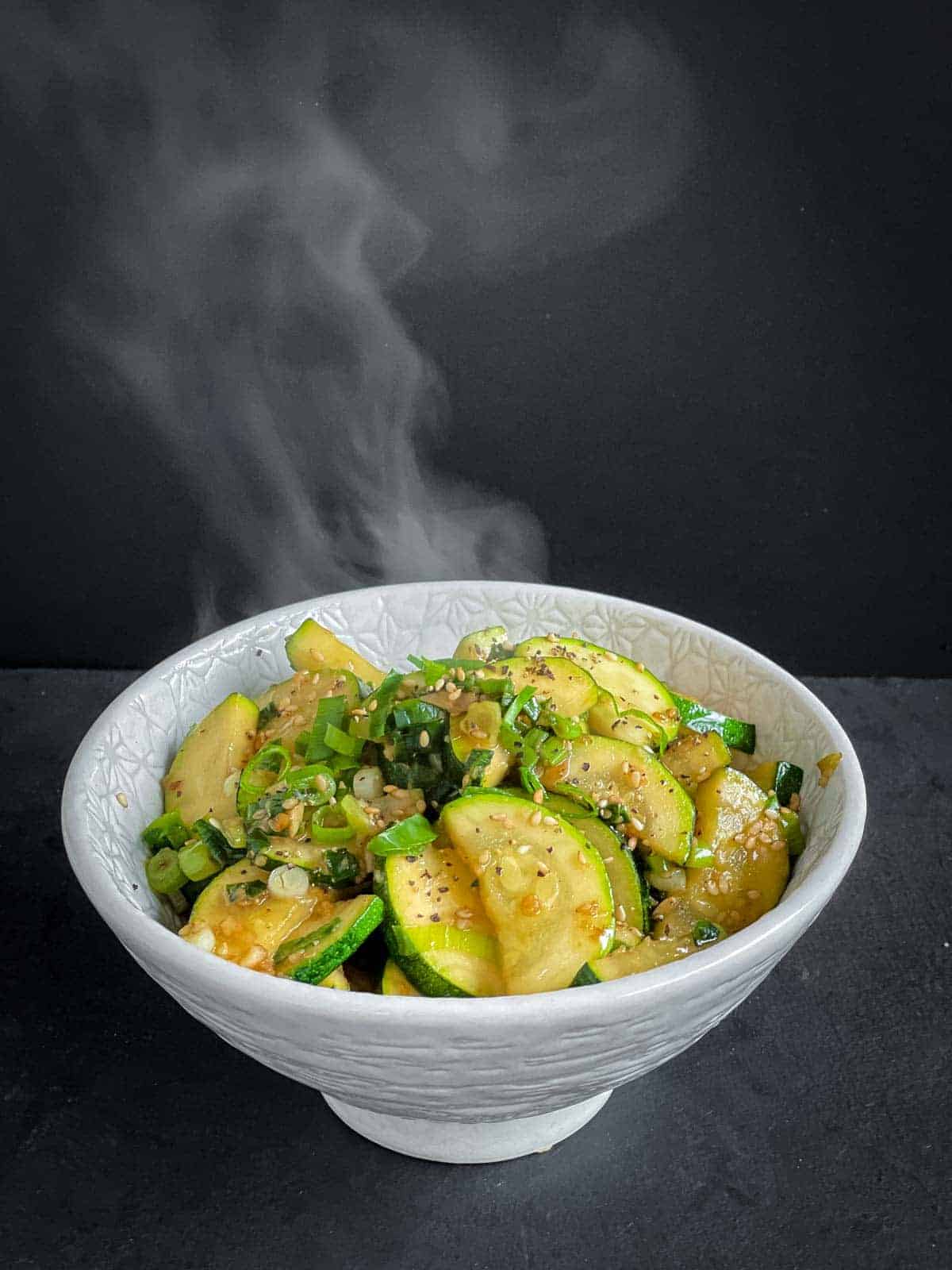
Korean Zucchini Side Dish – Hobak Bokkeum (호박 볶음)
5/15
What is there not to love about a 10-minute cooked side recipe? This stir-fried Korean zucchini side dish (hobak bokkeum) is sweet and tender with quintessential Korean ingredients such as garlic, sesame seeds and scallions.Testimonial from Hiwin
I absolutely love these banchan recipes! The variety and flavors are fantastic, and I just tried the spicy cucumber salad—so refreshing! Can’t wait to explore more of these delightful side dishes. Thank you for sharing!
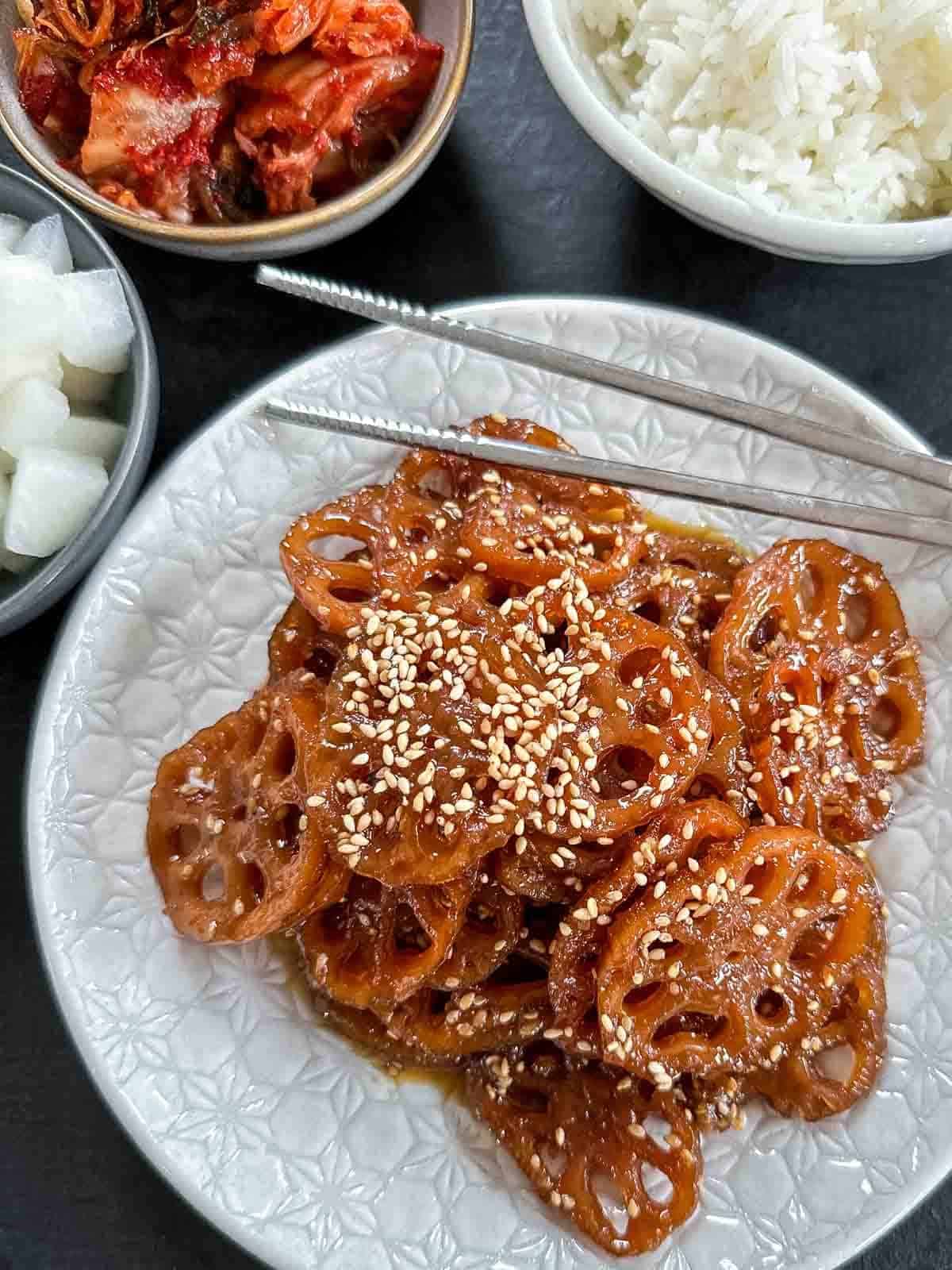
Korean Braised Lotus Roots – Yeon Geun Jorim [연근조림]
6/15
This Korean lotus root recipe is easy to make at home with only a few ingredients and will tantalise your tastebuds! Sweet and sticky with a slight crunch, it is incredibly moreish!
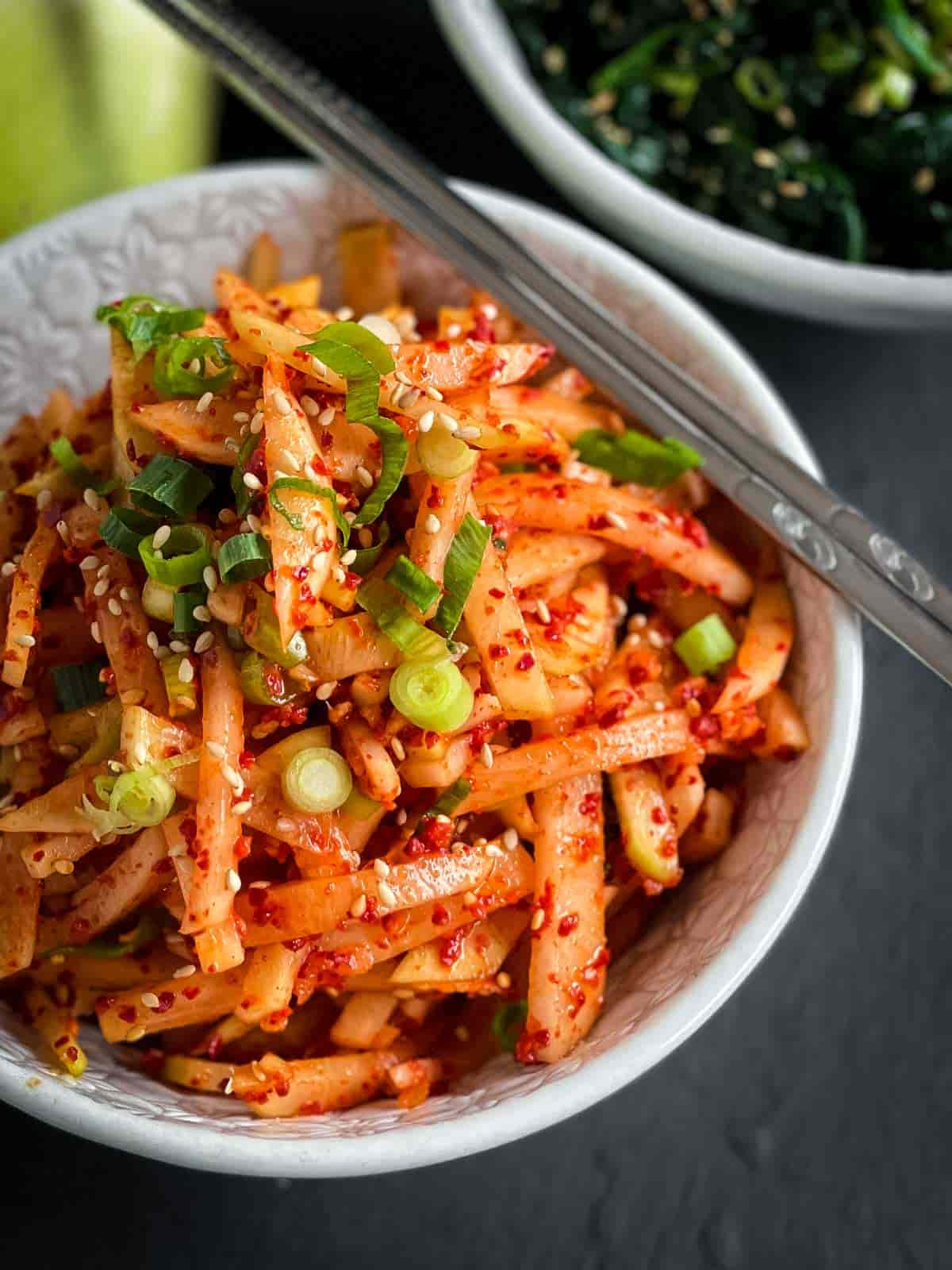
Korean Radish Salad – Musaengchae (무생채)
7/15
One of the most popular Korean side dishes, this Korean radish salad (musaengchae) is incredibly moreish! Crunchy and spicy, it is so easy to make at home. Once you start, it’s very hard to stop!
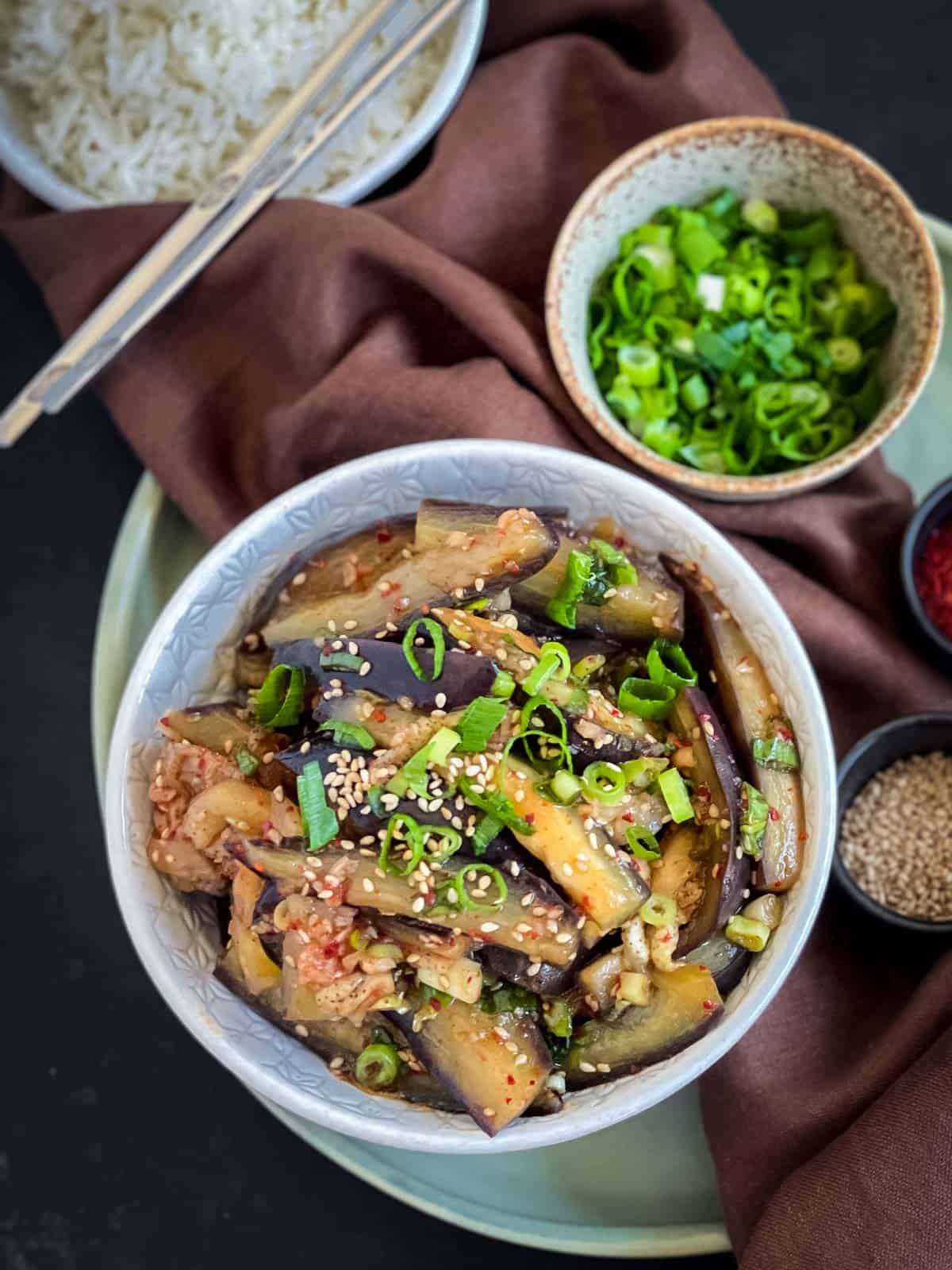
Korean Steamed Eggplant Side Dish – Gaji Namul (가지 나물)
8/15
Whipped up in under 10 minutes, this healthy and flavoursome Korean steam eggplant side dish is calling your name! Gaji namul is a popular Korean side dish, and it’s easy to see why. Lip smackingly delicious!
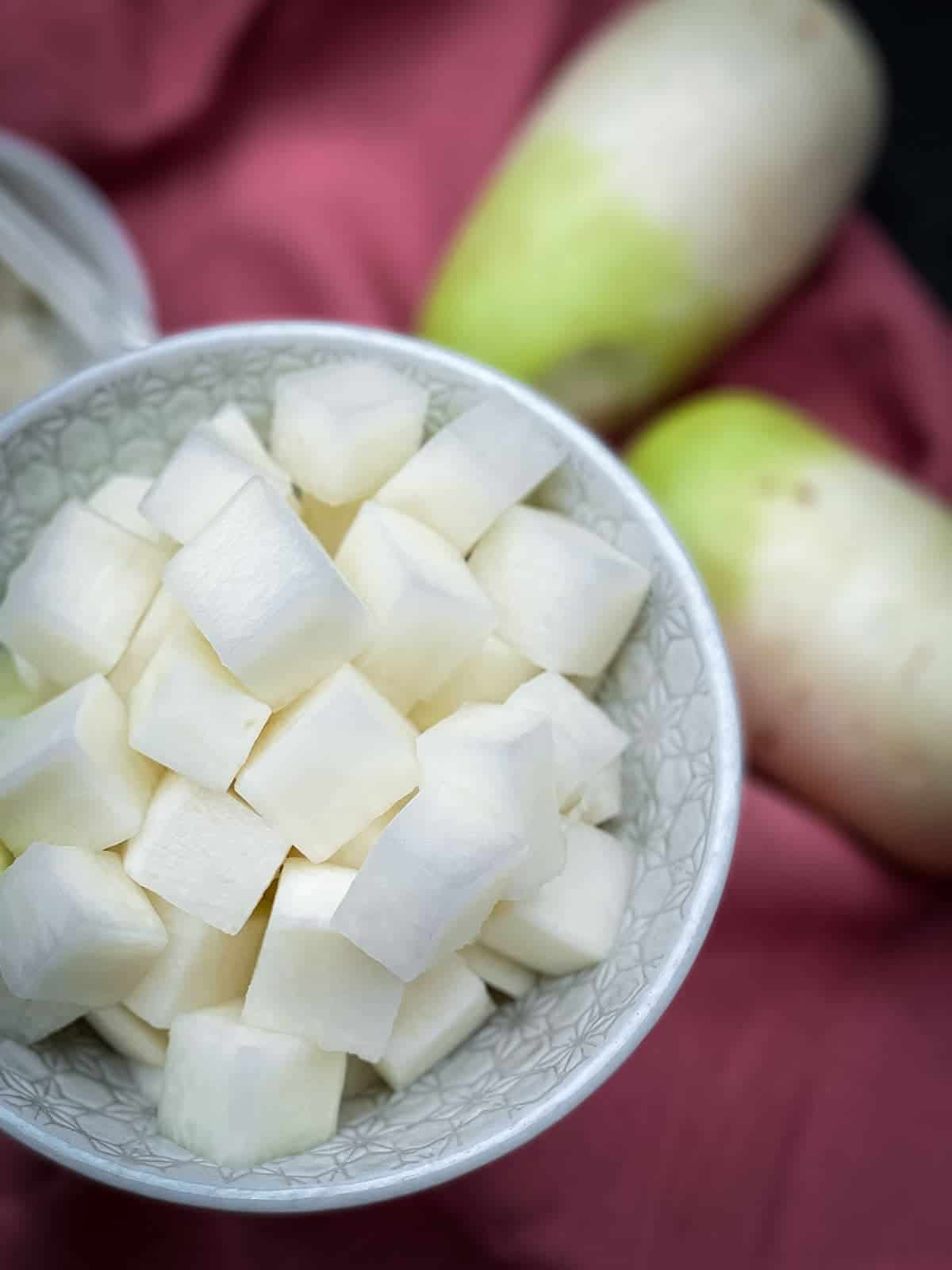
Korean Pickled Radish – Chicken-mu (치킨무)
9/15
Korean pickled radish (chicken-mu) is an incredibly popular Korean side dish or banchan that is served up in almost all Korean restaurants around the world. Learn how to make this at home so you can have it anytime!
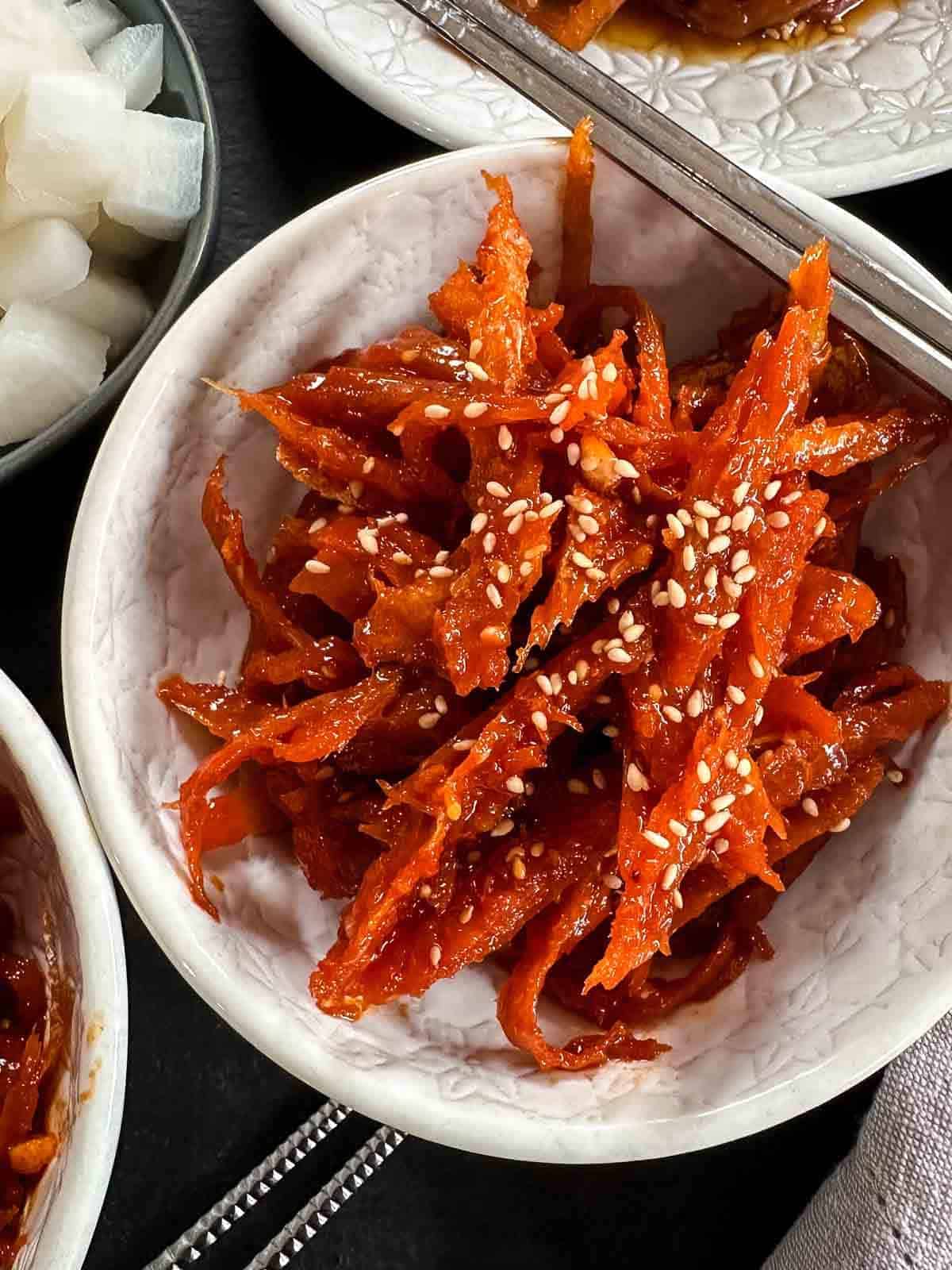
Korean Dried Pollock with Gochujang – Bugeopo Gochujang Muchim [북어포 고추장무침]
10/15
Indulge in the perfect harmony of the rich umami flavours of the dried pollock tossed in the sticky and spicy goodness of gochujang. Best Korean banchan in town!Testimonial from Cathleen
My old landlord used to have us over once a month and make Korean food and I loved it all!! I miss it now that I moved away, but I am glad you put this together so that I can try some of my favourite side dishes again!!
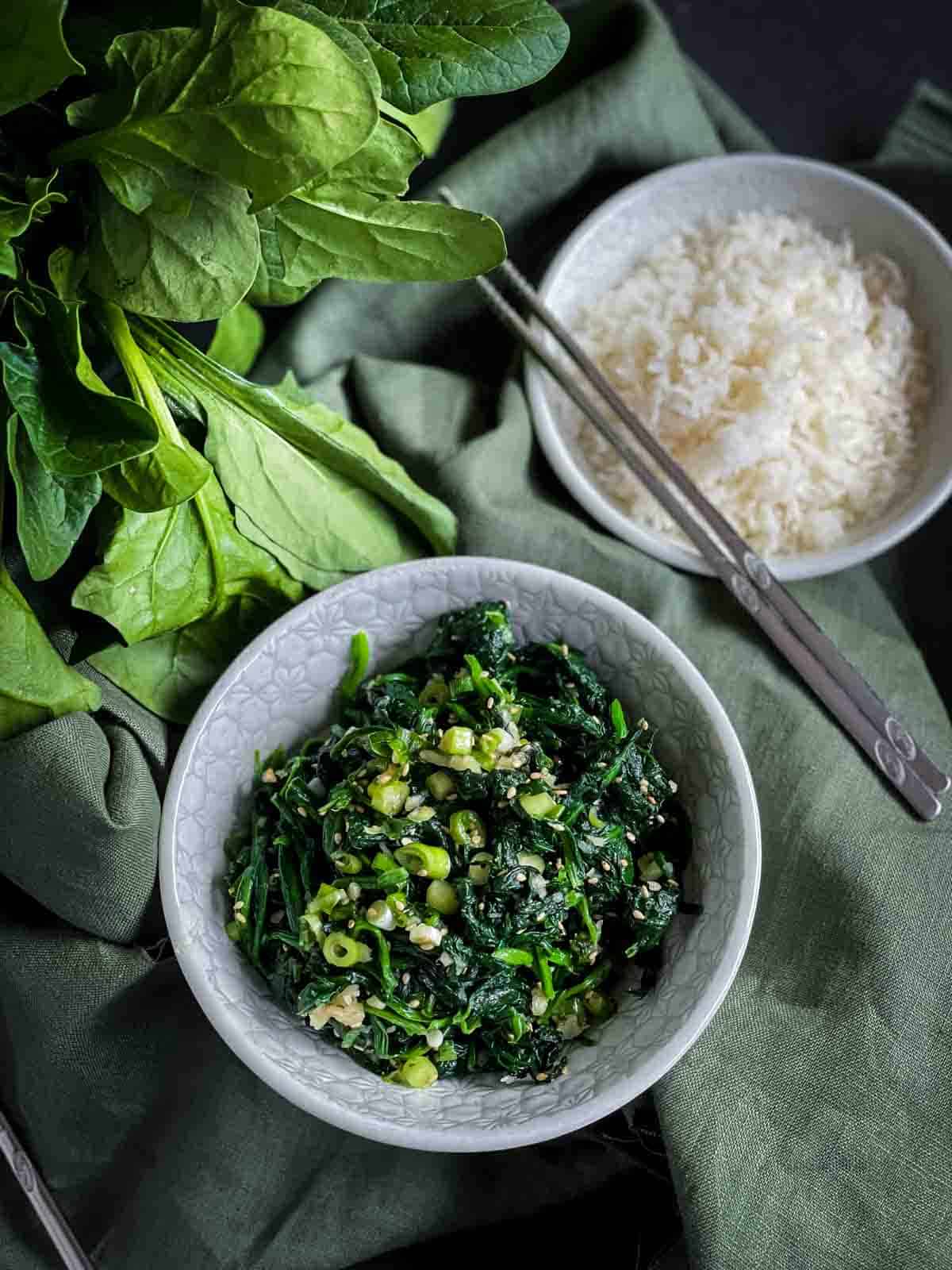
Korean Spinach Side Dish – Sigeumchi Namul (시금치나물)
11/15
A 10-minute recipe, this Korean spinach side dish (sigeumchi namul) is vegan and plant-based and ever so delicious—a must-have Korean side dish to add to the long list of traditional banchan.
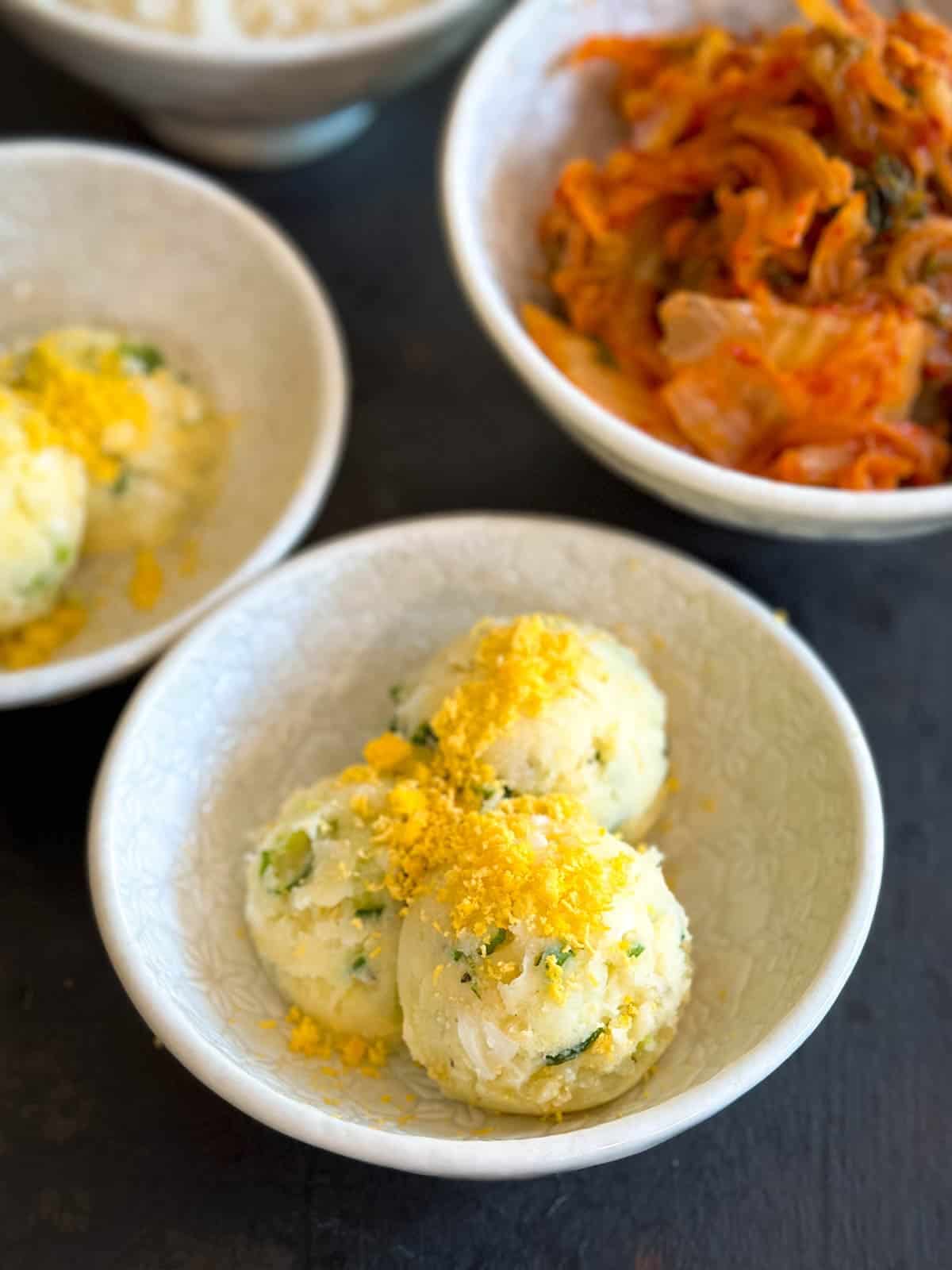
Korean Potato Salad – Gamja Salad (감자 샐러드)
12/15
Creamy, luscious, and ever so fluffy, this Korean potato salad is like no other Korean banchan. The perfect accompaniment and palate cleanser for Korean BBQs or simply to have on its own.
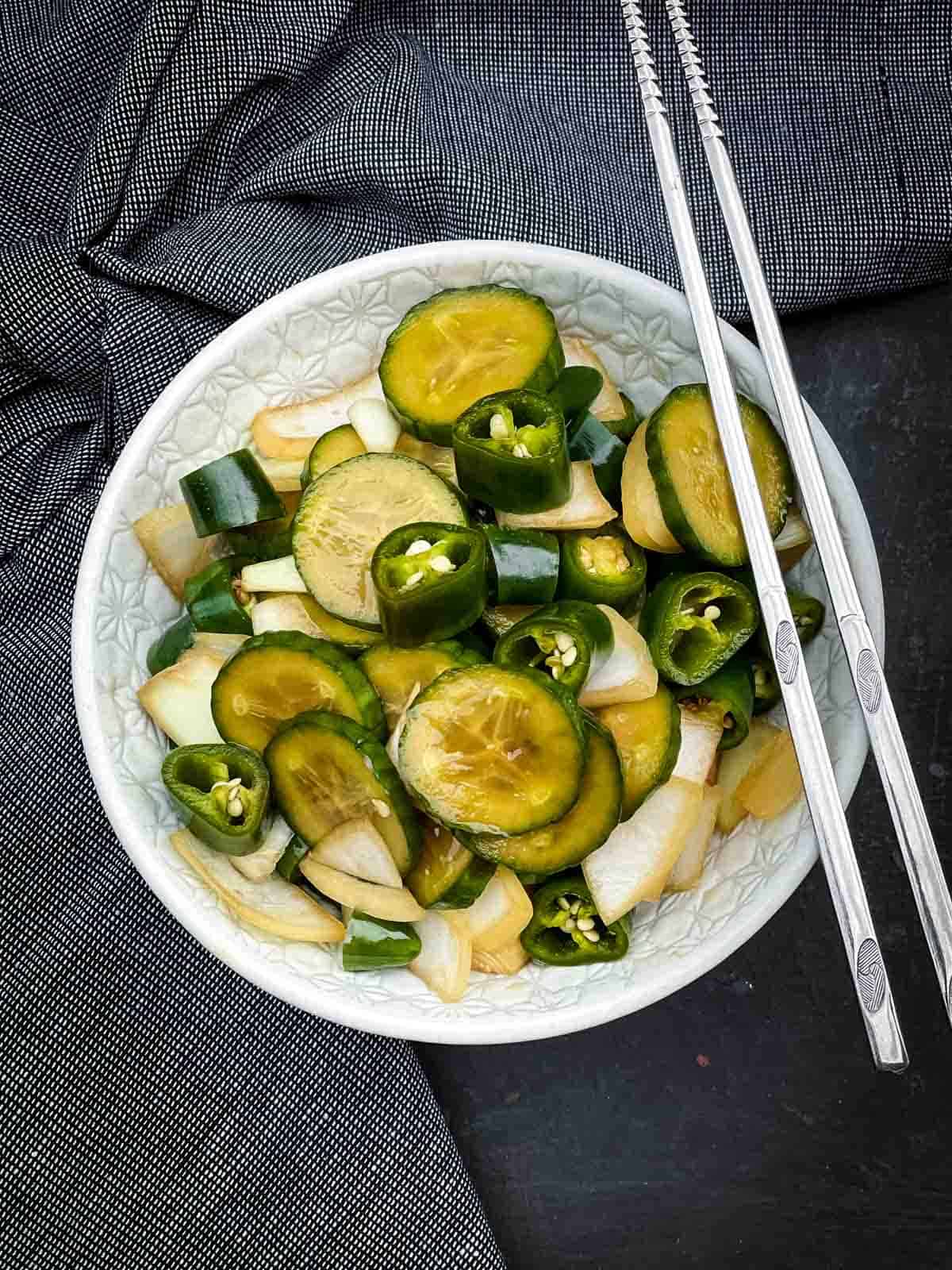
Korean Pickles in Soy Sauce – Jangajji (장아찌)
13/15
Need some Asian inspired pickles to give some variety? These Korean pickles in soy sauce brine, commonly known in Korea as jangajji, may just be precisely what you’re looking for. Sweet, umami, salty and spicy, it is a pickling recipe worth keeping!
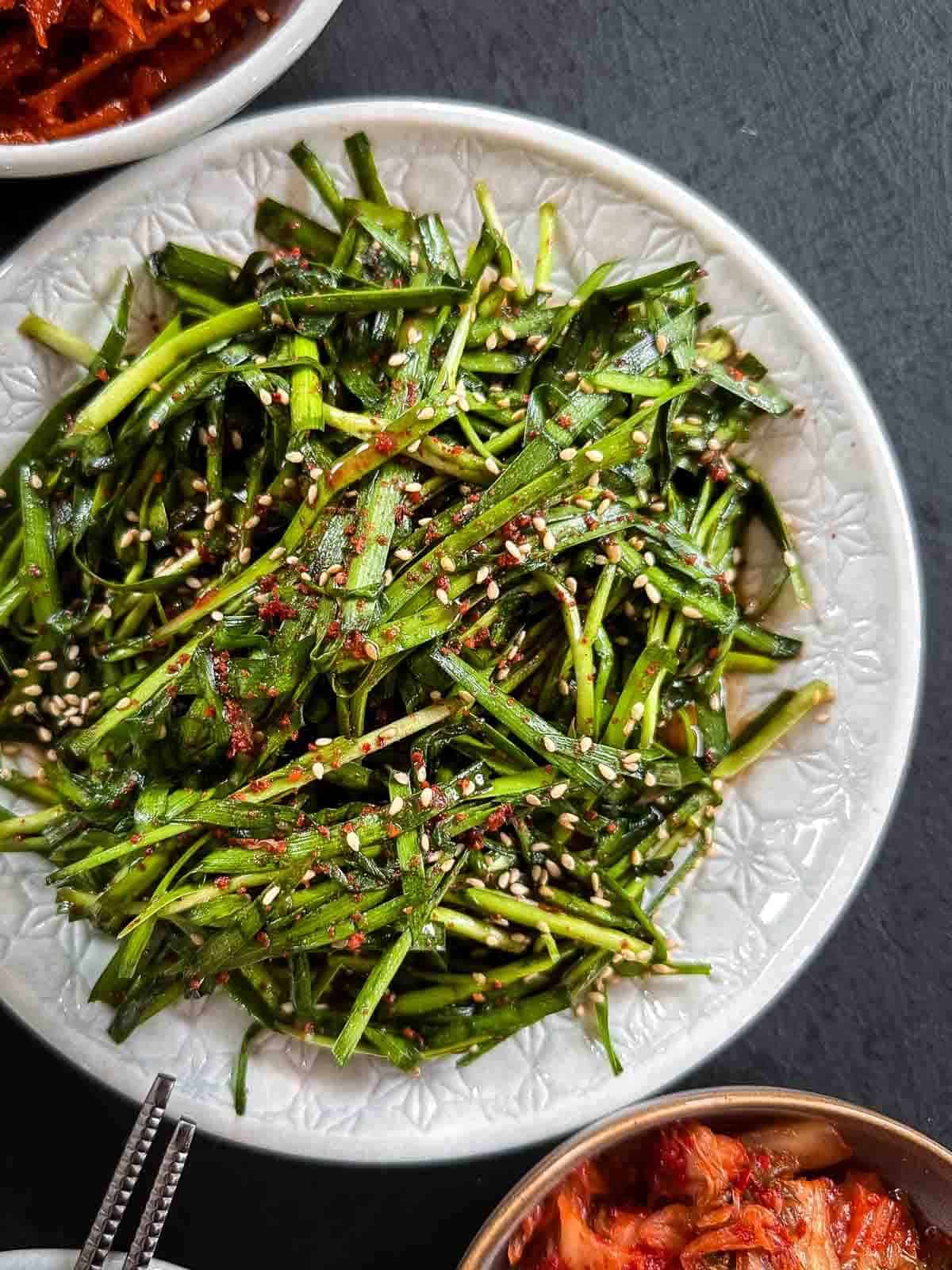
Asian Chive Kimchi – Buchu Kimchi [부추김치]
14/15
Love the seamless blend of these fresh and bitey Asian chives with the familiar flavours of Korean gochugaru. No fermentation required and simply delicious!
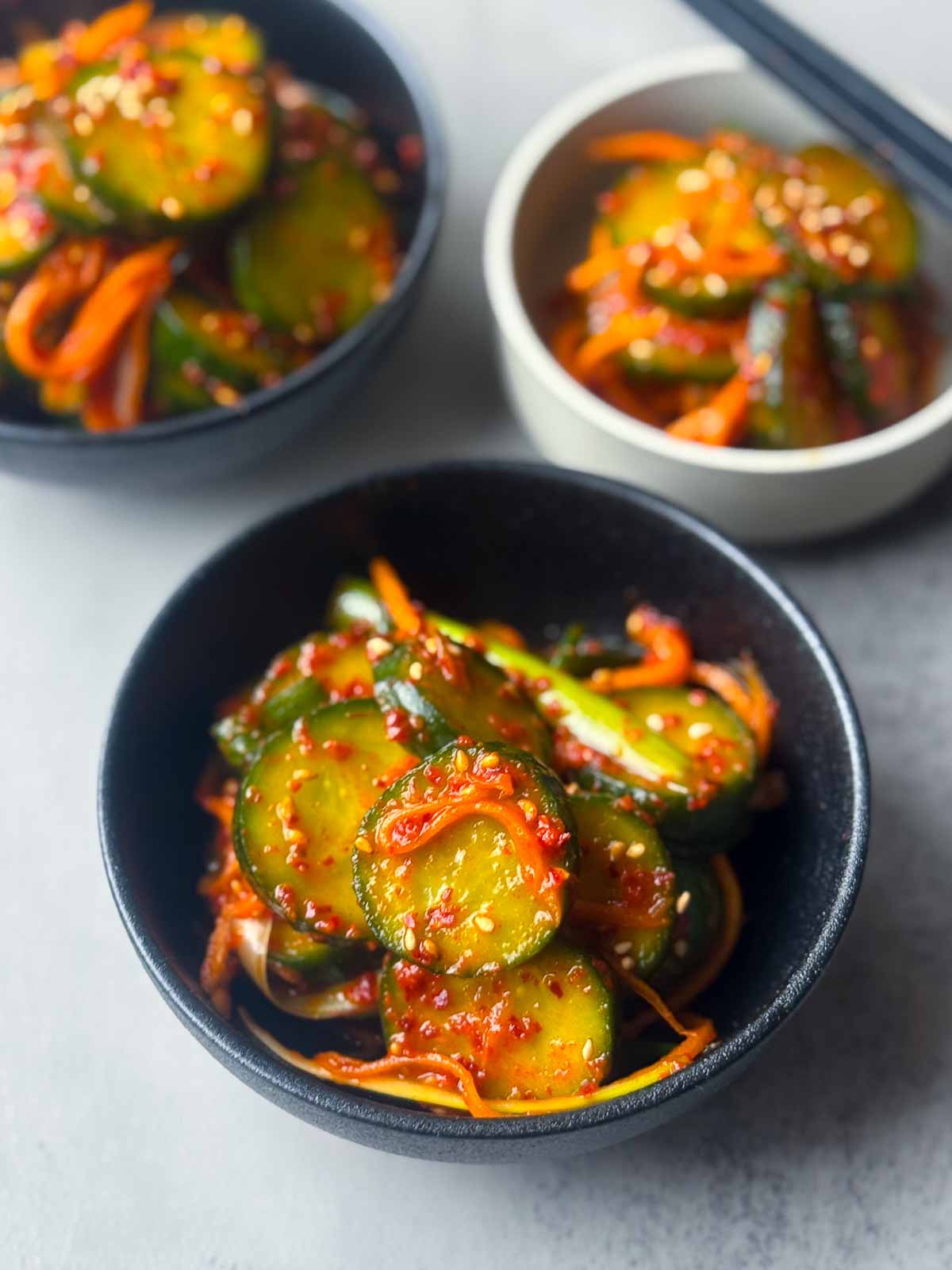
Korean Cucumber Kimchi (Oi Kimchi 오이김치)
15/15
This quick, no-ferment cucumber kimchi is crisp, tangy and full of bold Korean flavours. The perfect way to satisfy your spicy kimchi craving without waiting days.
Frequently Asked Questions
The shelf life of Korean side dishes differs, depending on how it is prepared. For example, fermented vegetables such as kimchi can last up to almost 9 months due to the preparation process.
This is because the fermentation process continues during this time, albeit at a much slower rate.
Quick pickled vegetables will last in an airtight container in the refrigerator for up to 2 weeks.
Other fresh vegetable banchan, be it raw, braised or seasoned, can last about 2-4 days in the refrigerator. This varies because some vegetables are simply more durable than others.
Banchan is meant to be consumed at room temperature.
Therefore, if you have pre-made banchan in the refrigerator, remove the portion you need and allow it to come to room temperature before serving.
Hundreds and thousands! There is not a definitive number, and nobody would really know.
New and creative banchan recipes continue to evolve every day as we experiment with new ideas, vegetables and cooking methods.
It can range from just a few to over a dozen, depending on the occasion. Everyday meals may include 3–5 side dishes, while special meals can have 12 or more, known as “12 cheop banchan.”
Yes! Many banchan recipes keep well in the fridge for 2–5 days, making them perfect for meal prep or lunchboxes. Dishes like spinach gomae, spicy cucumber kimchi, and pickled radish actually taste better the next day.
Almost always! Kimchi is considered an essential part of Korean dining and is often served alongside other banchan. But even without it, the variety of sides brings similar spice and tang to the meal.
Many are naturally vegetarian or can easily be adapted. Simply substitute fish sauce with soy sauce or tamari, and avoid anchovy-based condiments.
Of all the chopsticks in Asian culture, the Korean chopsticks are vastly different from the others. Korean chopsticks are made of metal, well, in modern times, stainless steel.
They are flat rather than rounded, heavier than their wooden or bamboo counterparts, and are a bit slippery.
The true reason Korean chopsticks are metal is a little unknown and filled with conjecture and even folklore. Some say that silver chopsticks were made for the nobility as they would change colour if their food was poisoned and therefore was a reliable warning tool.
Metal chopsticks have been around for quite some time as it was found in the tomb of King Muryeong of Baekje, who died in 523. Many people adopted silver or gold chopsticks in the days of old as it was a show of one’s wealth.
Recipe Collection by The Sidesmith Team
At The Sidesmith, we specialise in creating vibrant salads and side dishes that elevate every table. Our Korean side dishes (banchan) collection celebrates the harmony of textures and flavours found in Korean cuisine — salty, spicy, tangy, and umami.
Each recipe has been tested for authenticity, balance, and ease, ensuring home cooks can enjoy restaurant-quality Korean banchan with everyday ingredients.


